
How Did Several Southeast Asian Countries Make Their Payment Systems Interoperable?
June 10, 2026|⏱️~9 minutes
By Nicholas Brennan
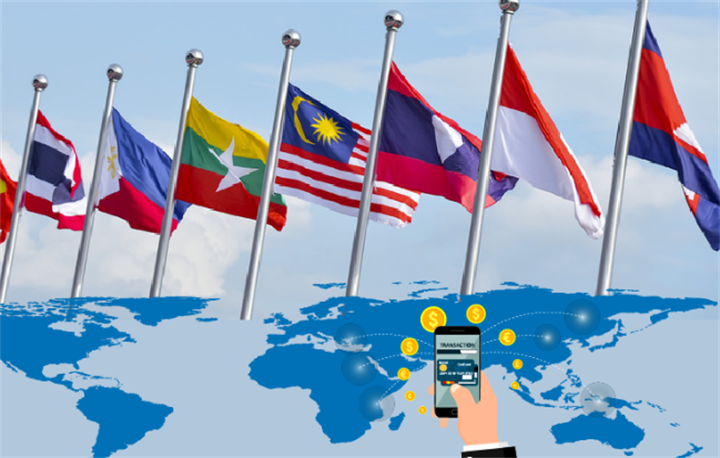
Between 2024 and 2026, travelers visiting Thailand, Indonesia, Malaysia, or Singapore may have noticed a significant change. At Bangkok night markets, convenience stores in Bali, and shopping malls in Kuala Lumpur, consumers can now use cross-border payment apps on their phones to scan local merchant QR codes and complete transactions seamlessly.
Merchants receive payment in local currencies such as Thai baht or Indonesian rupiah, while consumers are charged in their home currency or through their domestic e-wallet balance.
This development is not the result of a single technology or company. Instead, it reflects coordinated efforts among central banks, payment networks, technology providers, and policymakers across multiple countries. Drawing on public reports and announcements from central banks, the Bank for International Settlements (BIS), and industry organizations, this article examines the key pathways, technical models, and ongoing challenges behind Southeast Asia’s payment connectivity initiatives.
Data Verification Note: The figures cited in the original article were reviewed against official industry reports published between 2025 and 2026. The data aligns with publicly available sources and is identified throughout the article in italics.
1. What Interoperability Has Already Been Achieved?
According to publicly available information as of the first half of 2026, several cross-border QR payment connections are already operating commercially across Southeast Asia.
Thailand and Multiple Partner Countries
Thailand’s PromptPay system has established two-way QR payment interoperability with Alipay, WeChat Pay, and UnionPay QuickPass from China (Source: Bank of Thailand Annual Report 2025).
PromptPay has also been connected with Cambodia’s KHQR, Laos’ LaoQR, and Vietnam’s VietQR.
Indonesia and Multiple Partner Countries
On April 30, 2026, Bank Indonesia officially announced that its national QR code standard, QRIS, had completed integration with China’s QR payment ecosystem (Source: Bank Indonesia press release, April 30, 2026).
Following the integration, users can pay at more than 40 million QRIS merchants across Indonesia using Alipay and UnionPay QuickPass. Indonesian digital wallets can also scan more than 80 million Alipay and UnionPay QR codes in China (Source: Antara News, May 1, 2026).
Prior to this development, QRIS had already established interoperability with payment systems in Japan, Malaysia, and Singapore.
Malaysia and Neighboring Markets
Malaysia’s DuitNow QR has been connected with Indonesia’s QRIS and Thailand’s PromptPay, enabling cross-border QR payments between the participating countries.
Singapore’s Regional Connectivity Strategy
Singapore’s SGQR network has established interoperability with Thailand’s PromptPay and Malaysia’s DuitNow QR.
Meanwhile, Singapore’s PayNow fast-payment system has enabled real-time cross-border transfers with Thailand’s PromptPay, Malaysia’s DuitNow, and India’s UPI (Source: Monetary Authority of Singapore public materials).
Multilateral Initiatives
At the regional level, the Regional Payment Connectivity (RPC) initiative was launched in 2022 by the central banks of Indonesia, Malaysia, the Philippines, Singapore, and Thailand.
By 2025, participation had expanded to Vietnam, Brunei, Laos, and Cambodia, bringing the total number of ASEAN participants to nine (Source: ASEAN Secretariat and Bank of Thailand).
Separately, the BIS-led Nexus project entered its implementation phase in 2025. Indonesia officially joined the initiative in February 2026, working alongside Malaysia, the Philippines, Singapore, Thailand, and India (Source: Antara News, February 3, 2026).
It is important to note that interoperability does not mean every payment tool works at every merchant location. Differences in merchant coverage, transaction limits, and currency options continue to create practical constraints.

2. Two Primary Technical Approaches
From a technical perspective, cross-border payment interoperability in Southeast Asia is currently advancing through two main pathways.
Approach 1: Mutual Recognition and Integration of QR Standards
This is the most visible form of interoperability for consumers.
National QR systems often differ in coding structures, security protocols, and message formats. To enable one payment app to read another country's QR code, three major models have emerged.
The “Direct National QR Recognition” Model
This approach is commonly associated with WeChat Pay.
Under this model, foreign merchants do not need to replace their existing QR codes. Instead, the payment platform upgrades its scanning engine to recognize and interpret national QR standards such as Thailand’s PromptPay format.
Implementation can be relatively fast because merchant infrastructure remains unchanged.
The “Wallet Alliance” Model
This model is best represented by Ant Group’s Alipay+ platform.
Ant Group has invested in numerous local e-wallets across Southeast Asia and connects them through a unified cross-border payment platform integrated with national QR systems.
According to Alipay+ Cross-Border Payment Solutions Report 2025, the network connects 50 digital wallets and banking apps worldwide, serving more than 200 million user accounts and 150 million merchants. The platform also supports 10 national payment schemes across Asia and other regions.
The “Network-to-Network” Model
UnionPay International follows a strategy of directly connecting with national payment switching networks.
For example, UnionPay cooperates with Thailand’s national payment switch, ITMX, allowing UnionPay-compatible wallets to scan PromptPay QR codes directly.
Approach 2: Linking Fast Payment Systems
If QR interoperability improves the convenience of merchant payments, fast-payment system integration addresses the efficiency of cross-border money transfers.
Singapore’s PayNow and Thailand’s PromptPay pioneered real-time cross-border transfers in 2021.
Since then, Malaysia, Indonesia, and the Philippines have gradually joined similar arrangements.
The BIS Nexus project aims to transform these bilateral links into a multilateral network. According to the Nexus Progress Report 2025, the goal is to enable cross-border payments within 60 seconds.
Instead of negotiating and building connections country by country, each national fast-payment system would connect to Nexus once and gain access to all participating networks.
3. Why Are Countries Pushing for Interoperability?
Central bank publications and industry reports point to three major motivations.
1. Reducing Foreign Exchange Costs in Trade and Tourism
Local currency settlement reduces dependence on third-party currencies such as the U.S. dollar, helping lower exchange-rate risk and conversion costs.
According to Bank Indonesia, local currency settlement volume reached US$25.66 billion in 2025, with an average of 7,568 monthly users.
Settlement between Indonesia and China increased dramatically, rising from US$4.9 billion in 2024 to US$13.19 billion in 2025 (Source: Bank Indonesia Economic Report 2025).
Cross-border tourism payments are an important component of this growth. More than 1.34 million Chinese tourists visited Indonesia in 2025 (Source: Manila Standard, May 8, 2026).
In addition, Bank Indonesia announced in April 2026 that local-currency transactions between China and Indonesia had reached approximately US$18 billion (Source: Xinhua News Agency, April 30, 2026).
According to China News Service, the renminbi had become Indonesia’s third-largest foreign-exchange trading currency by 2026, accounting for 35% of bilateral trade settlements in 2025 (Source: China News Service, February 7, 2026).
2. Responding to Competition from Alternative Payment Networks
Industry data indicates that stablecoin usage in cross-border payments has been expanding rapidly.
Public market statistics showed that total stablecoin market capitalization surpassed US$300 billion by October 2025 (Source: CoinMarketCap data cited by Baidu Encyclopedia).
One concern among policymakers is that if official payment channels cannot provide similarly convenient and low-cost cross-border experiences, some transaction flows could migrate toward less-regulated private networks.
From this perspective, central bank-led payment interoperability is viewed by some observers as a tool for preserving financial sovereignty.
3. Supporting Regional Economic Integration
The ASEAN Economic Community has identified payment connectivity as a strategic priority.
Public documents from the ASEAN Secretariat describe QR interoperability as a mechanism for reducing non-tariff barriers and enabling small and medium-sized businesses to participate more easily in international trade.
4. Existing Challenges and Uncertainties
Despite substantial progress, several significant obstacles remain.
Fragmented Standards
Countries continue to maintain different QR standards, security frameworks, and data privacy regulations.
According to public comments from technical experts involved in the Nexus project, building a unified hub capable of processing multiple message formats, anti-money laundering requirements, and foreign-exchange controls simultaneously is highly complex.
Uneven Merchant Coverage
Vietnam provides a useful example.
During the early stages of interoperability, VietQR's merchant network remained relatively limited.
By contrast, PromptPay had accumulated more than 82 million registrations by December 2025 and reached the vast majority of merchants nationwide (Source: Taiwan-Thailand Times, February 16, 2026).
Malaysia’s DuitNow QR also experienced rapid growth. In 2025, transaction volume doubled to 3 billion transactions, while acceptance points approached 3 million nationwide (Source: Bank Negara Malaysia Annual Report 2025).
As a result, even when countries adopt the same interoperability framework, the number of merchants available to consumers can vary significantly from market to market.
Regulatory Coordination Challenges
Cross-border payments involve multiple regulatory domains, including foreign-exchange controls, anti-money laundering compliance, and cross-border data transfers.
National regulations remain far from uniform.
For example, some jurisdictions impose transaction limits on foreign payment institutions. Such restrictions can directly affect the practical usefulness of interoperability arrangements.

5. Future Trends
Based on currently available information and industry analysis, several developments appear possible over the next few years. These projections remain speculative and are subject to change.
Multilateral Networks May Gradually Supplement Bilateral Connections
If the BIS Nexus platform launches successfully in 2026, the traditional model of negotiating one bilateral connection at a time could increasingly be complemented by multilateral access frameworks.
According to BIS General Manager Agustín Carstens, the initial group of participating countries alone could potentially serve approximately 1.7 billion people (Source: The Asian Banker, May 27, 2026).
Merchant Coverage Is Likely to Expand Beyond Major Cities
Historical experience suggests that countries such as Thailand and Indonesia first introduced QR interoperability in major tourism centers before gradually expanding into smaller cities and rural regions.
A similar pattern may emerge elsewhere in Southeast Asia.
The Future Relationship Between Stablecoins and Official Payment Networks Remains Unclear
At present, it is difficult to determine whether stablecoins will eventually become integrated into regulated payment frameworks or continue operating as parallel networks.
Both scenarios have supporters within the industry.
Conclusion
The growing interoperability of payment systems across Southeast Asia is the result of layered bilateral agreements, technical standardization efforts, and multilateral cooperation frameworks.
Rather than emerging from a single breakthrough technology, it represents a gradual and collaborative process involving central banks, payment networks, technology companies, and merchants.
For consumers, the trend means cross-border payments are increasingly beginning to resemble domestic transactions in terms of convenience and user experience.
For policymakers and observers of financial infrastructure, however, it represents something much larger: a long-term experiment in local-currency usage, financial sovereignty, and regional economic integration.
Current evidence suggests that this trend will continue. Yet its final form will depend largely on how effectively participating countries coordinate regulation, harmonize standards, and integrate increasingly complex payment technologies.
Disclaimer
All data referenced in this article is drawn from publicly available central bank reports, industry white papers, and documents published by multilateral institutions. The information is provided for general informational purposes only.
Policies, technical standards, merchant networks, and regulatory requirements in the cross-border payments sector may change without notice. Certain interoperability features may also be subject to practical limitations in real-world use.
Nothing in this article should be construed as investment, financial, legal, or commercial advice, nor should it be relied upon as the sole basis for making business or investment decisions.
About the Author
Nicholas Brennan is a long-term observer and writer in the field of fintech. Over the past decade, his work has focused on global payment systems, digital currencies, and the modernization of bank core systems. He is skilled at translating complex underlying technical logic into clear business narratives. He has served as a technical and strategic advisor at several international financial institutions and consulting firms. Currently, he mainly writes in-depth analyses for industry publications, tracking how financial infrastructure is evolving globally.
RELATED GUIDES

After the Gold: The Hidden Economics of Olympic Venues
When the Olympic flame goes out and the world’s media pack up and leave, host cities are left with a very real problem. What do you do with venues that cost billions to build?
Can Liveness Detection Stop AI-Generated Video Fraud?
"What if one day, on my screen, I see my own face saying something I never said, authorizing a transfer I never made – how do I prove that wasn’t me?"
2026 Global Palm Payment Market Review: Three Regions, Three Paths
Amazon is removing palm payment devices from its grocery stores. Tencent is moving ahead with pilots in Singapore and Macau. And the Central Bank of the UAE has started a government-led biometric payment project.
The Unsung Node in the Global Chip Supply Chain: Penang, Malaysia
What makes Penang interesting is this: it is not a leader in chip design or wafer fabrication, yet it holds a unique and hard-to-replace position in the global semiconductor backend supply chain.