
After the Gold: The Hidden Economics of Olympic Venues
———How cities like Paris are making the numbers work after the Games
June 11, 2026|⏱️~10 minutes
By Clara Whitfield
When the Olympic flame goes out and the world’s media pack up and leave, host cities are left with a very real problem. What do you do with venues that cost billions to build?
The answer is usually written long before construction even begins.
As an analyst who follows infrastructure investment closely, I see post-Games operations not as a "maintenance issue" — but as a decades-long asset management decision.
Success depends on whether the host city asked itself one key question ahead of time: Are we building these structures for a two-week event, or for the next 50 years of city life?
Let’s look at Paris, Beijing and London. I’ll focus on real challenges and strategies, not a one-size-fits-all solution.
1. Why Olympic venues are so hard to run after the Games
Before talking solutions, we need to understand the root problem.
Studies point to a built-in design flaw. For the Games, venues need to handle extreme demands — tens of thousands of spectators, world-class pools, perfect track surfaces. So they are built large, specialized, and single-purpose.
But after the Games, that level of specialization is often too much. A standard athletics track with no long-term pro team becomes an expensive decoration — used maybe a few times a year.
And maintenance costs don’t go down just because usage is low.
A 2024 Oxford study update found that five of the last six Olympics had actual construction overruns of more than 100%. Another study from 2026 put the average cost overrun for Games between 1960 and 2024 at around 159% — with no real improvement across different countries or eras.
Harvard Business School scholars created eight indicators to assess post-Games venue risk. Examples: Can the venue be reduced in size afterward? Are there competing venues nearby? Is there a plan for ongoing reinvestment?
Athens, a widely cited failure, struggled on many of these fronts.
The takeaway? Most post-Games problems are actually design choices made early on. If you don’t build in a "second life" from day one, even the best operations team will have a tough time.
2. Paris 2024: Embedding public assets directly into communities
Paris responded to these problems in a systematic way.
According to an IOC report from October 2025, 86% of all permanent Olympic venues since 1896 are still in use. For 21st-century Games, that number rises to 94%. Paris used 95% existing or temporary venues. Very few new permanent venues were built from scratch.
The logic is simple: don’t build new permanent assets unless you have a clear long-term need.
What’s more interesting: Paris deliberately focused public investment on areas that needed renewal most.
A May 2024 study by the University of Limoges’ sports law and economics center estimated that between 2018 and 2034, the Paris Games will bring €6.7–11.1 billion in economic impact to the Île-de-France region. Their "optimistic" scenario was about €8.9 billion. That impact mainly came from event organization (42%), construction (28%) and tourism (30%).
The report notes this measures "net economic activity" — not profitability for the organizing committee. 80% of public investment went to Seine-Saint-Denis, Paris’s youngest and poorest suburb.
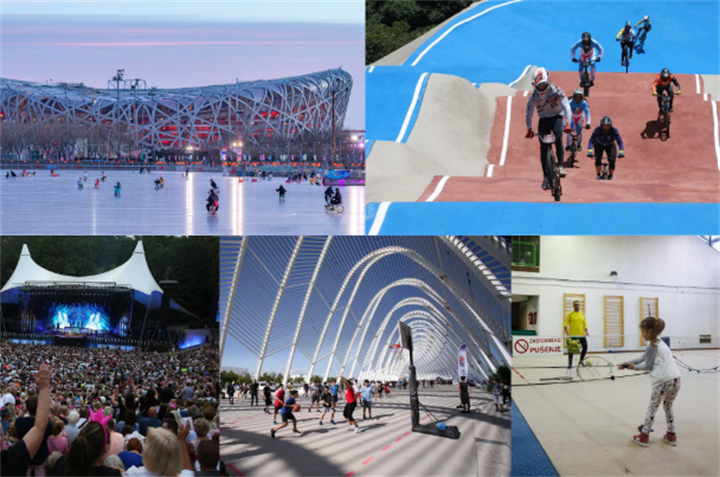
The Olympic Village is a good example. Athletes’ apartments became about 2,800 housing units — three-quarters of them affordable. Two new schools were added, serving about 6,000 local residents.
That means money spent for a short-term event also covered years of housing and school needs for the community.
That said, Paris’s finances aren’t without debate.
France’s Court of Auditors estimated in June 2025 that public spending linked to the Olympics was nearly €6 billion, with security costing about €1.4 billion. A follow-up that October put short-term GDP growth at roughly 0.07 percentage points, noting that some expected benefits were offset by "crowding out" effects.
The organizing committee added that their own operations ended with a surplus of about €75.7 million.
So different budget perspectives give different numbers — public spending vs. committee accounts. You need to look at multiple sources.
From a strategy point of view, Paris showed that the Olympics don’t have to be a one-time spectacle. They can be a catalyst for urban renewal. The IOC has since included this model in its sustainable event guidelines. Los Angeles 2028 plans to follow a similar path, aiming to turn over 90% of venues into community facilities.
3. Beijing: From specialized venues to diversified revenue platforms
Beijing is the only city to host both summer and winter Games. Its approach is different — it already had many permanent venues. So it shows another path.
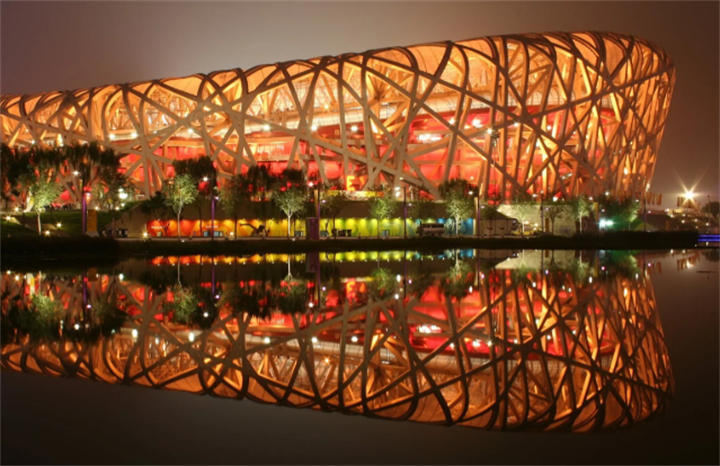
Take the "Bird’s Nest" national stadium. Construction cost about 3.4 billion yuan. Annual maintenance is around 80 million yuan, according to industry reports.
In the first few years, ticket sales couldn’t cover operations. But after a decade of experimentation, it built a diverse revenue mix.
Early 2026 industry reports said the Bird’s Nest made over 500 million yuan in revenue in 2025 — turning a profit after covering depreciation and taxes. It hosted 56 major events, sold over 3 million tickets, and made more than 100 million yuan in merchandise sales that year.
By the end of 2025, cumulative revenue had exceeded 5 billion yuan, with several straight years of net profit.
But be careful: different sources give different annual numbers — some say "over 320 million yuan," others say "over 500 million yuan." This may come from different accounting methods (pre-tax vs. post-tax, including licensing revenue or not).
Another interesting case is Chongli in Zhangjiakou. This was a winter-skiing town before the 2022 Winter Games. After the Games, it shifted toward four-season operations.
Official data: in 2024, Chongli hosted 8.538 million visitors, with total tourism revenue of 9.55 billion yuan. Summer visitors reached 4.3 million — surpassing winter for the first time.
The Olympic Village there has been turned into a multi-purpose facility with study camps, training bases and hotel-style apartments.
Chongli shows that spreading seasonal risk across different products on the same assets can work. But long-term sustainability still needs more data. Curiosity about new facilities fades. Keeping visitors coming requires ongoing content updates and marketing spending.
4. London 2012: Using venues as a lever for regional economy
London’s strategy was different from both Paris and Beijing. It didn’t try to make venues directly profitable. Instead, it used the Olympic Park as an "anchor asset" to drive economic transformation in East London.
The old Olympic press center became Here East, an innovation campus. It now hosts e-sports, cybersecurity and creative industries.
A 2022 study by the London Legacy Development Corporation and Oxford Economics found that Here East had created over 10,300 jobs. In 2021, it contributed about £700 million in gross value added. It helped about 72 startups raise over £270 million.
By 2030, the area is expected to add about 125,000 jobs. Meanwhile, the Olympic Park still attracts about 6 million visitors a year. The London Aquatics Centre serves about 1 million users annually — mostly locals and schoolchildren.
The logic here: you don’t need venues to be profitable on their own. Instead, they boost land values and attract private investment. The city collects returns through taxes and jobs from the larger economic growth.
But this model has critics. A 2024 University of Portsmouth study found the Games’ effect on local house prices and transaction volumes was "limited and short-lived." It also may have contributed to displacement of lower-income residents — gentrification.
That means overall economic growth doesn’t automatically improve life for existing local residents.
5. Common post-Games strategies and their preconditions
Looking across cases, here are typical paths for venues:
Public sports access – turning professional venues into community sports spaces.
Cultural and commercial complexes – adding concerts, exhibitions and retail.
Pro sports and youth training – hosting lower-level pro events and sports academies.
Urban function conversion – offices, cultural spaces or housing.
But for any of these to work, two conditions usually matter:
1. Pre-Games planning for post-Games use
Design removable seating, flexible spaces, and commercial hooks. If you wait until after the Games, retrofit costs often make operations much harder.
2. The host city’s population and consumer base
Smaller cities tend to struggle more with empty venues and ongoing subsidies. That’s not an operations problem — it’s a market size problem.
6. What’s next: Financial tools and rule changes
Some cities are exploring financial tools. For example, packaging future venue revenue into infrastructure REITs. This could help recover some upfront investment and bring in professional operators.
But that depends on stable, predictable cash flows — which Olympic venues often lack.
Another approach: deeper public-private partnerships (PPP). Paris co-designed post-Games functions with operators during the construction phase. That’s different from Rio, where bidding happened after the Games and drew limited interest.
At the institutional level, the IOC’s own reforms are pushing change. Olympic Agenda 2020 encourages hosts to use existing or temporary venues first. Only build new permanent ones when there’s clear long-term community need.
IOC 2025 data shows 94% of 21st-century permanent Olympic venues are still in use. Los Angeles 2028 has already said it will mostly rely on existing venues.
The trend is clear: the Olympics are being organized more like a temporary event — and less like a permanent construction project.
Conclusion
The post-Games economics of Olympic venues is not just a financial statement. It’s about how a city balances short-term concentration of spending against long-term, ongoing benefits.
When Seine-Saint-Denis gets better jobs because of Olympic investment. When a once-empty space becomes a local pool that families use every week. Those changes may not fully show up in ROI figures.
But they might be the dimensions of legacy that matter most.
The reality is that post-Games venue success depends on each city’s planning ability, market conditions, and willingness to invest over the long haul. There’s no single formula.
Disclaimer: This article is for informational purposes only and does not constitute investment or financial advice. All data and views cited are based on publicly available research and industry sources. The author and publisher assume no responsibility for any decisions made based on this content.
About the Author
Clara Whitfield is a writer and data analyst specializing in global economics. Her approach is to connect macroeconomic data with the daily lives of ordinary people, using concrete stories to explain abstract trends. She has worked at international development agencies and financial media, covering topics such as trade, consumer behavior, and the labor market. She believes that a cup of coffee, an old piece of clothing, or a pair of sports shoes can all serve as an entry point to understanding the world economy.
References:
[1] International Olympic Committee. (2025). Over 125 Years of Olympic Venues: Post-Games Use. Olympic Studies Centre.
[2] French Court of Auditors. (2025). Public Expenditure Related to the 2024 Olympic and Paralympic Games: First Inventory.
[3] OECD / Paris 2024 Organising Committee. (2025). The Legacy of the Paris 2024 Olympic and Paralympic Games.
[4] University of Limoges, Centre for Sports Law and Economics (CDES). (2024). Economic Impact Study of Paris 2024.
[5] Okada, I., & Greyser, S. A. (2018). After the Carnival: Key Factors to Enhance Olympic Legacy and Prevent Olympic Sites from Becoming White Elephants. Harvard Business School Working Paper, No. 19-019.
[6] London Legacy Development Corporation / Oxford Economics. (2022). 10 Years On: London‘s Olympic Park as a Leading Hub for Technology and Innovation.
[7] University of Portsmouth / King’s College London. (2024). Legacy and Urban Regeneration: Long-term Local Impact of the London 2012 Olympic Games.
[8] Budzier, A., & Flyvbjerg, B. (2024). The Oxford Olympics Study 2024: Are Cost and Cost Overrun at the Games Coming Down?. arXiv:2406.01714.
[9] Ansar, A., Flyvbjerg, B., & Budzier, A. (2026). Do Projects Learn Across Space and Time? Evidence from the Olympics. Public Management Review.
[10] International Olympic Committee Sustainability Department. (2025). Major Event Sustainability Guidelines (Paris 2024 Case Study Inclusion).
RELATED GUIDES
Southeast Asia’s Last-Mile Delivery: Comparing Motorcycles, Tuk-Tuks, and Electric Two/Three-Wheelers
On a humid afternoon in Kuala Lumpur, Manuel climbs onto his old petrol-powered motorcycle. Four food delivery bags are strapped to the back.
Which Professions Are Shrinking Globally?
If you only look at unemployment rates, the global job market in 2026 seems fine.OECD unemployment has been around 4.9% for months — below what many economists call the "natural rate." But that number can be misleading.
Can a National Digital ID Be Used at Airports or Banks in Another Country?
Digital IDs are becoming a reality in many countries.From U.S. mobile driver's licenses to the EU's digital wallet.From India's biometric travel system to South Korea's blockchain ID plan.
How to Spot Investment Scams That Pretend to Be from International Institutions?
Have you ever received a message from someone claiming to be from INTERPOL?They say a seized fund is waiting for you. All you need to do is pay a small “processing fee” first.