The Unsung Node in the Global Chip Supply Chain: Penang, Malaysia
June 13, 2026|⏱️~10 minutes
By Clara Whitfield
Penang is a state in northwest Malaysia.
It covers about 1,049 square kilometers and has roughly 1.77 million people (2023 data).
In 2025, its GDP reached an estimated 121.5 billion ringgit, with GDP per capita at 76,030 ringgit – consistently above the national average.
Although Penang accounts for only about 1% of Malaysia's land area, it contributes roughly 7.6% of the country's GDP.
What makes Penang interesting is this: it is not a leader in chip design or wafer fabrication, yet it holds a unique and hard-to-replace position in the global semiconductor backend supply chain.
Why can such a small place generate so much economic power?
A plausible explanation is that Penang's strength does not come from natural resources or cheap labor.
Instead, it comes from "ecosystem density" built over half a century.
When hundreds of upstream and downstream companies cluster within a few dozen kilometers, efficiency in sourcing, response times, and collaboration improves exponentially.
This advantage is very difficult for new entrants to copy quickly, because it is essentially a barrier built by time.
From this perspective, Penang's case suggests that in today's supply chain restructuring, "reliability" and "efficiency" may offer more long-term value than simply being "cheap."
From Free Port to "Silicon Valley of the East": A Path of Industrial Transformation
Penang's modern economy began with the British free port in the late 18th century.
In 1969, the Malaysian federal government revoked Penang's free-port status.
This external shock forced local leaders to shift toward industrialization.
In 1972, Intel set up its first overseas production base in Penang.
Over the following 50 years, AMD, Renesas, Broadcom and others followed.
Today, Penang is home to more than 350 multinational corporations and about 6,500 SMEs.
Companies can source roughly 80% of their procurement needs within a 50-kilometer radius.
Several observations can be drawn from this evolution.
First, Penang's transformation was not the result of a grand top-down plan, but an adaptive response to external pressure.
This suggests that economic resilience often gets activated under stress.
Second, Penang did not try to "leapfrog" – it started with low-value assembly and testing, then moved up gradually over 50 years.
That slow-and-steady path may not be glamorous, but it has proven sustainable.
Third, Penang has also developed a medical device cluster as a spin-off.
Once a region builds core capabilities in precision manufacturing, spillover effects happen naturally.
For other regions hoping to develop manufacturing, Penang's experience might be more useful than a "build a fab overnight" strategy.
Penang's Concrete Role in the Global Chip Supply Chain
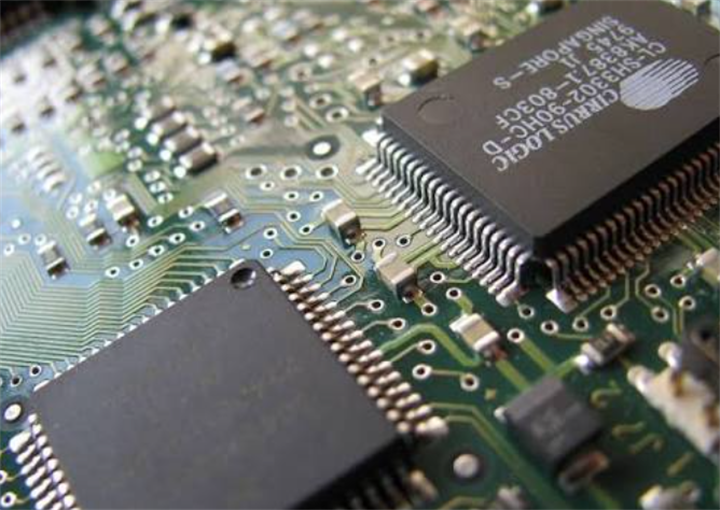
Penang focuses on the backend of the semiconductor industry: packaging, assembly, and testing.
Industry reports estimate that Malaysia accounts for about 10-13% of the global chip packaging and testing market, with Penang as the core hub.
Key indicators: roughly 40% of the world's automotive-grade chips are packaged and tested in Penang and the neighboring Kulim area in Kedah.
About 45% of Penang's semiconductor products are exported to the United States.
In 2023, Penang approved 60.1 billion ringgit in manufacturing investment, rising to 63.96 billion ringgit in 2025.
How should we interpret these numbers?
One notable point: automotive-grade chips require extremely high reliability.
Once a production line is certified, switching suppliers is very costly.
That means Penang has built a real "switching-cost barrier" in this segment.
Another angle: Penang's heavy dependence on the US market (45%) is both a sign of deep integration into global value chains and a potential vulnerability.
When the policies of a single large market shift, that concentration can become a risk amplifier.
Therefore, when local leaders call for "reducing dependence on a single trading partner," this is not just a strategic choice – it is a necessary risk management response.
Opportunities and Constraints in a Shifting Geopolitical Landscape
After 2018, as multinational firms began diversifying their supply chains, Penang became a major beneficiary.
It offered mature packaging and testing capabilities, a relatively neutral international stance, and tariff-free access to the US market.
Intel has invested roughly $7 billion in advanced packaging facilities in Penang and Kulim.
Infineon has put about $7 billion into expanding its Kulim plant into one of the world's largest silicon carbide production bases.
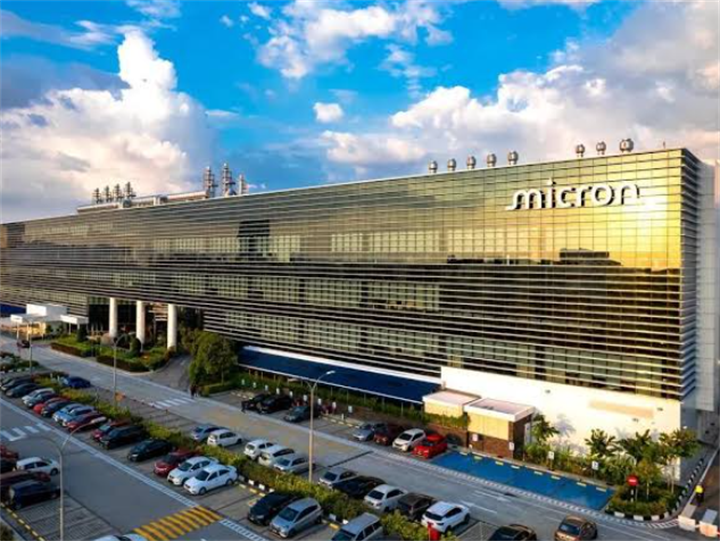
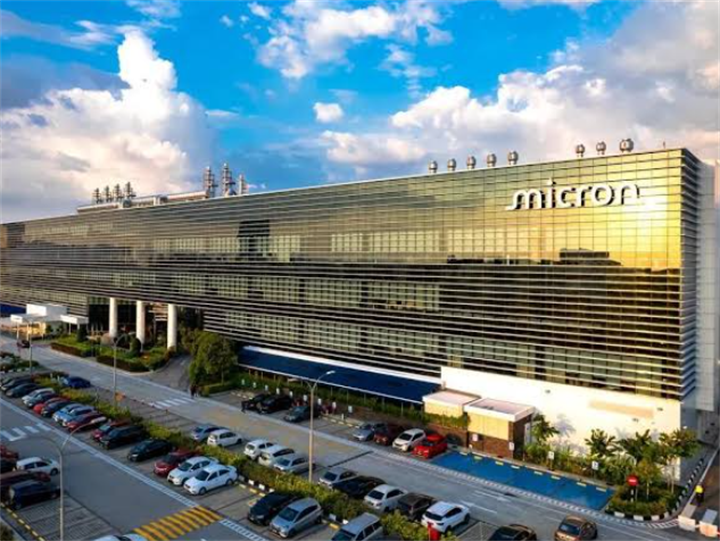
Micron started its second assembly and test plant in Penang in 2023.
Meanwhile, manufacturers from other economies have also increased their presence in Penang.
In May 2025, the US removed broad export restrictions on Malaysia and more than 150 other countries.
Several analytical points stand out here.
First, Penang's appeal does not come from "choosing a side."
Quite the opposite – its value lies in not picking sides.
In today's geopolitical environment, neutral manufacturing nodes that can do business with multiple parties are becoming a scarce resource.
Second, this dual role also creates internal tension.
As the US tightens oversight of technology flows, Penang may face pressure to distinguish "which products can go where."
Third, the policy window is not unlimited.
The US CHIPS Act is bringing some packaging capacity back to America.
If that trend accelerates, Penang's relative advantage in backend services could erode.
So the key question is whether Penang can use the current window of opportunity to move up the value chain before that window closes.
Attempts to Move Upstream – and the Bottlenecks
In 2024, Malaysia launched its National Semiconductor Strategy, aiming to shift from packaging and testing toward IC design and advanced packaging.
Penang's response is the "Silicon Design @5km+" plan, which has already attracted about 45 IC design firms.
ARM announced a $250 million investment in Malaysia in 2025.
The "Silicon Island" land reclamation project is also moving forward.
But moving upstream faces clear structural constraints.
Malaysia's electrical and electronics sector has an estimated shortage of about 50,000 engineers.
Only about 5,000 engineering graduates enter the workforce each year.
Industrial land on Penang Island is becoming scarce, with land prices rising noticeably in several areas.
A few judgments can be made about these constraints.
First, industrial upgrading requires not just money and policy, but time.
It typically takes 5-10 years of project experience to train a qualified IC design engineer.
No amount of subsidy can accelerate that.
So Penang's shift from "backend" to "front-end" will likely be measured in decades, not years.
Second, land constraints are pushing Penang toward cross-regional coordination with neighboring Kedah.
This is "forced" regional integration, but in the long run it might lead to a more efficient division of labor.
Third, the talent shortage is a global problem.
To ease it, Penang may need to actively attract foreign engineers and bring back Malaysians who work abroad – and that depends on soft factors like living conditions, visa policies, and salary competitiveness.
Final Observations: What Penang Tells Us About the Future
Based on the analysis above, here are a few forward-looking observations.
First, Penang's importance lies not in technological cutting-edge, but in system reliability.
In the global chip supply chain, the most advanced nodes are often the most fragile.
Penang's backend role, backed by half a century of industrial density and stability, acts as a kind of ballast.
This role is hard to replace in the short term, because trust and tacit knowledge take time to build.
Second, Penang has benefited from geopolitics, but its long-term value depends on moving beyond geopolitics.
Much of the current investment boom is driven by US-China tensions – a cyclical dividend.
If Penang simply accepts "China+1" relocation without building its own design capabilities and technological depth, its attractiveness could fade quickly when external policy winds shift.
True sustainability comes from internal industrial upgrading, not external arbitrage.
Third, talent and land are the two hard constraints on Penang's upward climb, but they are not impossible to solve.
These problems cannot be fixed overnight, but institutional innovation can help: land-sharing arrangements with neighboring states, engineering visa schemes for global talent, and stronger joint training programs between universities and companies.
Penang's leadership is aware of these challenges.
The key is execution speed.
Fourth, Penang may become a reference model for a "multi-polar" globalization era.
In a more fragmented world, neutral nodes that do not fully align with any single bloc but stay closely connected to all major economies may appear more often on the global industrial map.
Whether Penang succeeds – whether it can upgrade its industry while staying neutral – will offer a valuable precedent for other regions facing similar choices.
Disclaimer: This article is for informational and analytical purposes only and does not constitute investment advice. All data and information cited are from public sources. The author makes no guarantees as to their completeness or accuracy. Readers should verify information and consult professional advisors before making any investment decisions.
About the Author
Clara Whitfield is a writer and data analyst specializing in global economics. Her approach is to connect macroeconomic data with the daily lives of ordinary people, using concrete stories to explain abstract trends. She has worked at international development agencies and financial media, covering topics such as trade, consumer behavior, and the labor market. She believes that a cup of coffee, an old piece of clothing, or a pair of sports shoes can all serve as an entry point to understanding the world economy.
References:
[1] Penang eyes 'Silicon Valley of the East 2.0' push, The Star, 7 May 2026
[2] Malaysia's Semiconductor Growth: Can It Move Up the Value Chain?, ASEAN Briefing, 2026
[3] Perfecting Penang's semiconductor future through Asean and the East Asia Summit, Malay Mail, 16 October 2025
[4] Time to diversify, not rely on sole trading partner, says Penang CM, The Vibes, 9 August 2025
[5] Cover Story: Chipped away? Strengthening Malaysia's position in a reshoring world, The Edge Malaysia Weekly, 2 June 2025
RELATED GUIDES

Can Liveness Detection Stop AI-Generated Video Fraud?
"What if one day, on my screen, I see my own face saying something I never said, authorizing a transfer I never made – how do I prove that wasn’t me?"
2026 Global Palm Payment Market Review: Three Regions, Three Paths
Amazon is removing palm payment devices from its grocery stores. Tencent is moving ahead with pilots in Singapore and Macau. And the Central Bank of the UAE has started a government-led biometric payment project.
The Shift from Heels to Sneakers – A Small Reflection of Changing Social Mindsets
In recent years, a noticeable change has appeared on city streets, in offices, and on public transport across the globe: more women are wearing sneakers, and fewer are wearing high heels.
Fake Transfer Screenshots Are a Global Scam: How “Delayed Payments” Became a Tool for Fraud
Imagine you receive a screenshot from someone. It clearly shows they have sent you a bank transfer.Do you check your own account balance first? Or do you ship the product or send the money right away?