2026 Global Palm Payment Market Review: Three Regions, Three Paths
————Amazon exits retail, Tencent expands to Singapore and Macau, the UAE launches a government-led pilot
June 9, 2026|⏱️~9 minutes
By Nicholas Brennan
The payments industry is seeing an interesting split.
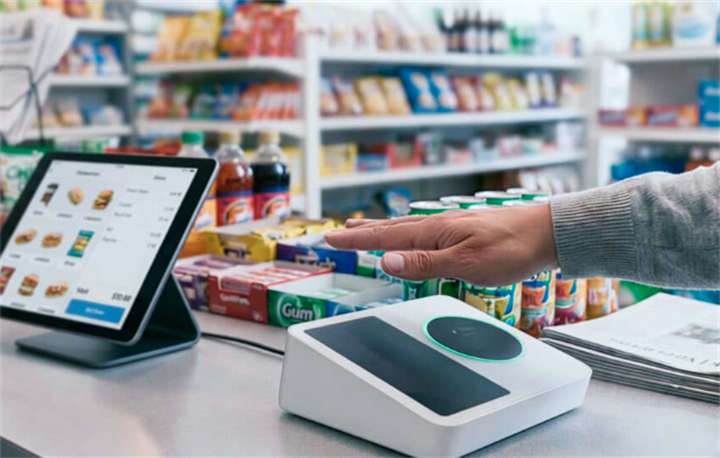
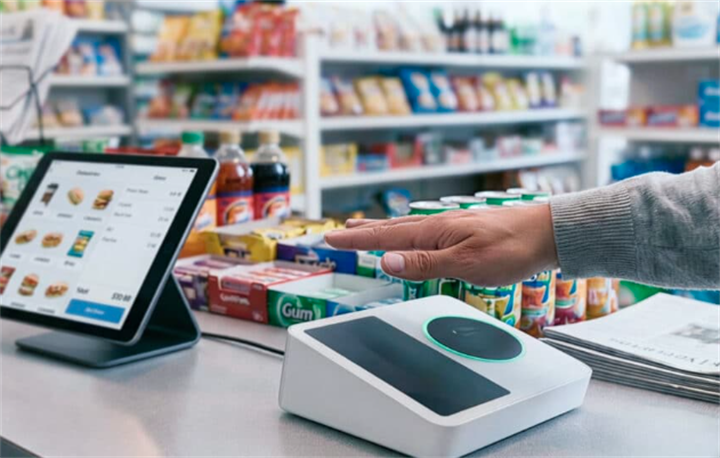
Amazon is removing palm payment devices from its grocery stores. Tencent is moving ahead with pilots in Singapore and Macau. And the Central Bank of the UAE has started a government-led biometric payment project.
These three moves show what palm payment technology really looks like in 2026.
This is not just about which company has better tech. It is about use cases, user habits, and trust. This article looks at where palm payment is being used, what users think, and where it might go next.
Market data: Growth is real, but concentrated
According to QYResearch, the global palm payment market reached $189 million in 2025. It is expected to hit $491 million by 2032. That is a compound annual growth rate of about 14.8% from 2026 to 2032 (source: QYResearch industry report, 2026).
China is growing the fastest. By 2032, it is expected to account for about 42.2% of the global market, making it the largest single market (source: same as above).
But "market growth" does not mean the technology is widely accepted everywhere. Most of the growth is happening in a few countries and specific use cases.
Three markets, three logics
United States: Why Amazon pulled back
In January 2026, Amazon announced it would stop offering Amazon One palm payment to retailers by June 3, 2026. The official reason was "limited user adoption" (source: Amazon official announcement, January 2026). All retail devices will be removed, and user data will be securely deleted (source: Amazon support page, January 2026).
Why was adoption so low? A survey from early 2026 offers clues. Handwave and Censuswide surveyed 2,001 US adults. About 48% said they would use palm payment regularly if data security were guaranteed. But 41% worried about biometric data misuse. And 32% did not trust retailers to manage the systems properly (source: Censuswide/Handwave survey, early 2026).
The key issue is not bad technology. In the US, contactless cards and mobile payments are already very fast and easy. Palm payment adds very little extra convenience. But the perceived privacy cost – a permanent biometric that cannot be reset like a password – feels high to many people.
So a reasonable conclusion: in markets where payment is already highly convenient, palm payment has a hard time finding a strong reason to exist.

3.2 Singapore and Macau: A pragmatic export, serving specific users
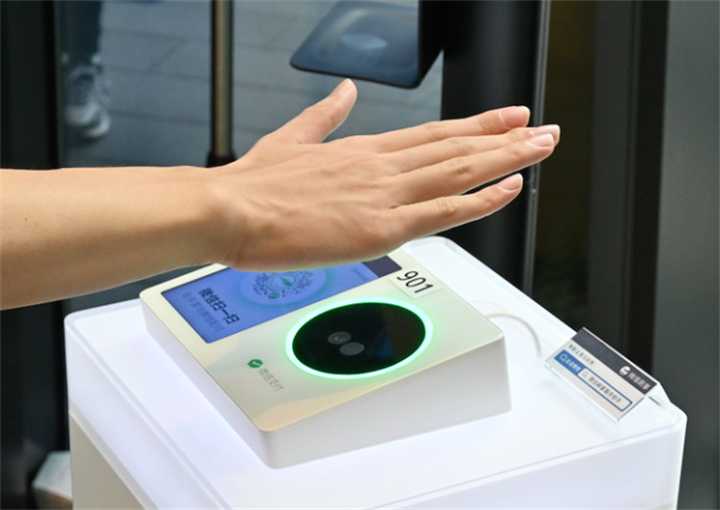
Unlike Amazon's retreat, Tencent's pilots in Singapore and Macau are still moving forward.
The Singapore pilot started around April 2025. According to a July 2025 report by Lianhe Zaobao, local payment firm FOMO Pay brought Tencent's palm payment technology to Singapore. The first location was the Adventure Cove Waterpark at Resorts World Sentosa. A Chinese tourist working in fintech said: "The process was very smooth... after playing, you can pay at a food cart or restaurant with just a palm scan. No need to take your phone out of a waterproof pouch" (source: Lianhe Zaobao, July 2025).
Macau launched earlier, in September 2024, at Galaxy Macau resort (source: Tencent and ICBC Macau cooperation announcement, September 2024).
Both markets currently serve mainly Chinese outbound tourists, not local residents. According to Lianhe Zaobao, the service is tied to WeChat Pay and requires a Chinese mobile number to register. FOMO Pay admitted that it is not easy to get locals to try new tech. "Without the intense competition seen in China or the US, Singaporeans are generally cautious. Few want to be the first to try" (source: Lianhe Zaobao, July 2025).
So these overseas pilots are best seen as a "supplementary channel for Chinese tourists" rather than a sign that palm payment is taking over the world.
3.3 UAE: An underestimated early mover
The UAE offers a different case.
On January 28, 2026, the Central Bank of the UAE launched the Middle East's first government-led facial and palm biometric payment proof-of-concept at the Dubai Land Department. It was developed by Network International and US-based PopID (source: UAE central bank announcement and multiple international news reports, January 2026). The system may eventually integrate with the UAE national ID, combining border clearance and payment functions. The pilot results will shape a national rollout planned for the third quarter of 2027 (source: VisaHQ report, January 2026).
Why is the UAE moving faster than many Western countries? One likely reason: it already has a mature digital ID infrastructure – UAE Pass. Reports indicate that UAE Pass is used for over 5,000 government and private services (source: Biometric Update, 2026). Residents have become accustomed to biometrics within a government-led, trusted framework.
In other words, when palm payment connects to an existing national trust infrastructure, adoption barriers can be much lower. This "identity + payment" integration would be very difficult to achieve in the short term in Europe or the US, where privacy laws are stricter and digital ID systems are more fragmented.
So a reasonable trend: palm payment is more likely to grow in countries that already have a government-backed digital ID system, rather than in markets where payment is already hyper-convenient.
User concerns: Convenience vs. permanent privacy risk
Looking at feedback across markets, user attitudes fall into two main areas.
Positive feedback focuses on convenience in specific situations. At water parks or swimming pools – places where phones are hard to carry – not having to pull out a device is a real benefit. Elderly users also respond well: no need to unlock a phone or open an app.
But negative concerns are equally strong. The core worry: palm prints and palm veins are permanent. If a database is hacked or data is misused, you cannot "change" your palm like a password.
The same Censuswide/Handwave survey found that younger users (ages 18-34) are more open to biometric payments, but data leaks remain their top concern (source: same survey).
Regulatory responses vary. The EU's GDPR treats biometric data as a special category with strict rules. The US has no federal law, but several states have passed biometric privacy acts. China's Personal Information Protection Law requires biometric data to be stored locally and gives users the option to opt in.
Some preliminary observations
First, palm payment is unlikely to replace existing mainstream methods. In most everyday settings, QR codes, cards, and mobile payments work well. Palm payment will likely remain in niche scenarios where phones are inconvenient or speed is critical – water parks, gyms, corporate access control, hospitals.
Second, regional divergence will likely continue. In East Asia (especially China) and the Middle East, where digital infrastructure is mature and certain use cases exist, palm payment may gain meaningful share. QYResearch expects China to account for over 40% of the global market by 2032 (source: QYResearch, 2026). In the US and Europe, unless privacy laws change or a killer use case emerges, growth may remain slow.
Third, the long-term value of palm technology may be more about "identity verification" than "payment." Access control, attendance tracking, membership verification – these scenarios may be more willing to accept permanent biometrics than payment is. If true, palm technology could evolve from a payment tool into an identity infrastructure.
Fourth, user trust remains the biggest unknown. Technical security is one thing. Psychological comfort is another. For palm payment to reach wider adoption, what may matter more than speed are transparent data rules, strong user control (like the ability to delete data at any time), and a long track record of safe use.
Final thoughts
So will palm payment become the next mainstream method?
The evidence points to a moderate answer: it will become a useful supplement in some places and some scenarios, but it is unlikely to replace what people already use.
Amazon's retreat does not necessarily mean the technology failed. It may reflect a strategic shift. Tencent's cautious overseas expansion does not mean the technology is about to take over the world – it is a pragmatic complement. The UAE's acceleration shows that when technology meets an existing national trust infrastructure, things can look very different.
For the average user: if you see palm payment at a water park or pool, you might try it – after you understand how your data will be used and set a daily spending limit. If you see no reason to change your current habits, that is perfectly fine too.
Technology adoption is rarely a straight line. Sometimes, a step back is not a failure – it is just finding a better fit.
Disclaimer: This article reflects the author's personal analysis based on publicly available information. It does not constitute investment advice or a technical recommendation. Market decisions involve risks. The author assumes no responsibility for the accuracy or completeness of the data cited.
References
[1] QYResearch. (2026). Global Palm Vein Payment Market Report 2026-2032.
[2] Amazon official announcement & support page. (January 2026). Amazon One discontinuation for retail customers.
[3] Censuswide / Handwave. (Early 2026). US consumer attitudes toward palm biometric payments (n=2,001 US adults).
[4] Lianhe Zaobao / The Straits Times. (July 2025). Singapore palm payment trial coverage.
[5] Tencent / WeChat Pay official cooperation announcements. (2024-2025).
[6] Central Bank of the UAE. (January 28, 2026). Biometric payment proof-of-concept launch (covered by multiple international news outlets).
[7] EU General Data Protection Regulation (GDPR), Article 9.
[8] China's Personal Information Protection Law.
About the Author
Nicholas Brennan is a long-term observer and writer in the field of fintech. Over the past decade, his work has focused on global payment systems, digital currencies, and the modernization of bank core systems. He is skilled at translating complex underlying technical logic into clear business narratives. He has served as a technical and strategic advisor at several international financial institutions and consulting firms. Currently, he mainly writes in-depth analyses for industry publications, tracking how financial infrastructure is evolving globally.
RELATED GUIDES
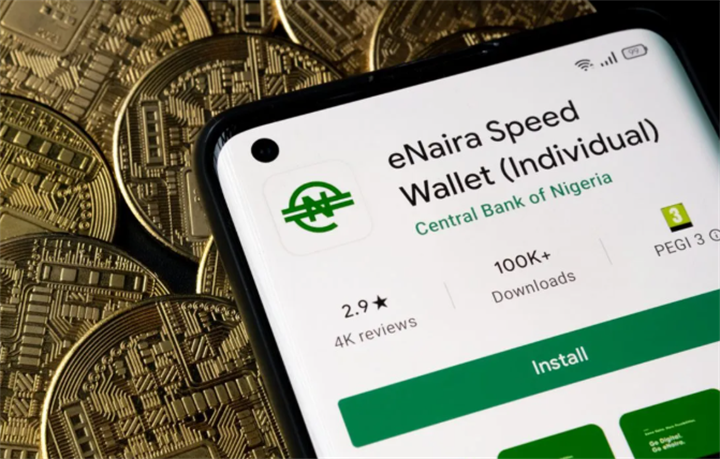
Nigeria’s eNaira Has Been Out for Years. What Do People Actually Use It For?
As of June 2026, the project has been running for nearly five years. The government set multiple goals for it: improving financial inclusion, lowering remittance costs, and making government payments more efficient.
Where Your Donated Clothes Actually Go: The Global Supply Chain of Secondhand Apparel
When you drop an old T-shirt into a collection bin near your home, you might think you are doing something charitable.
The Unsung Node in the Global Chip Supply Chain: Penang, Malaysia
What makes Penang interesting is this: it is not a leader in chip design or wafer fabrication, yet it holds a unique and hard-to-replace position in the global semiconductor backend supply chain.
Manipulated Financial News Is Spreading. How Can You Spot Deepfake Information?
Deepfake technology is changing how financial information spreads—and how investors make decisions.