
Where Your Donated Clothes Actually Go: The Global Supply Chain of Secondhand Apparel
June 15, 2026|⏱️~10 minutes
By Clara Whitfield
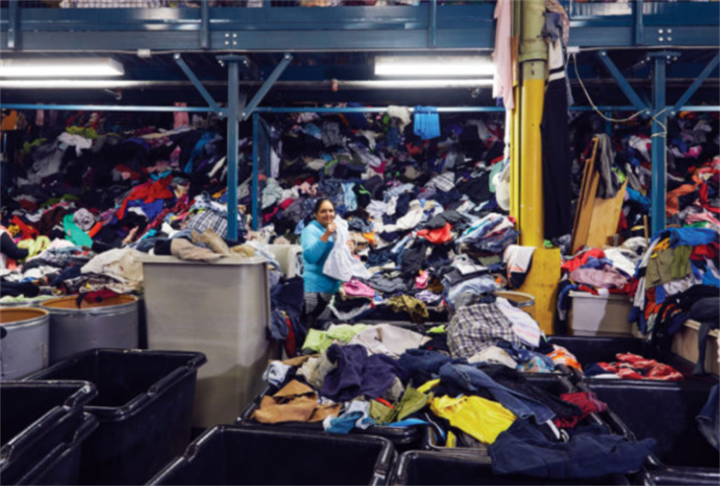
When you drop an old T-shirt into a collection bin near your home, you might think you are doing something charitable. In reality, that shirt is more likely to start a commercial journey across the ocean. It gets sorted, compressed, loaded into a container, and ends up in an open air market on the other side of the world – sold for one or two dollars.
Behind this simple act lies a fast growing global trade worth tens of billions of dollars. It is neither an environmental fairy tale nor a pure business success story. It is full of contradictions: it creates jobs but also destroys industries; it extends the life of clothes but also creates new environmental problems; it shows the efficiency of globalisation, but also its injustices.
A fast-growing market that is not always profitable
Several market research firms agree that the secondhand apparel market is growing much faster than traditional clothing retail.
According to a report by Research and Markets published in January 2026, the global secondhand apparel market is expected to grow from about $198.6 billion in 2025 to $485.9 billion by 2031, with a compound annual growth rate of 16.08%. Another report – ThredUp‘s 2026 Resale Report (data from GlobalData) – puts the 2025 market at $257 billion, up 13% from the previous year, and expects it to reach $393 billion by 2030.
These numbers differ slightly because of different ways of counting (online sales, what counts as “secondhand,” etc.). But they all point to the same conclusion: secondhand clothing has moved from a niche to a mainstream part of the fashion industry.
But fast growth does not mean high profits. Industry surveys show that only a small share of companies in this trade manage to stay profitable over time. Why? Because secondhand clothes are not a standard product. Every batch is different. Sorting, cleaning, shipping and repacking all require labour and space.
And only a fraction of each batch – usually summer clothes in good condition – can be sold at a decent price. Industry data suggest that three to four out of every ten tons of used clothes shipped to Africa end up as waste.
Younger consumers are often seen as the main drivers of this market. Surveys show that a large share of Gen Z and millennials see buying secondhand as a conscious lifestyle choice, not just a way to save money. Environmental concerns, criticism of fast fashion, and the joy of finding unique pieces are all pushing this trend.
However, there is a paradox that is often overlooked. A study released by Yale University in December 2025 found that people who buy secondhand clothes frequently also tend to buy more new clothes. The research was conducted by Meital Peleg Mizrachi, a postdoctoral fellow at Yale’s economics department, together with Ori Sharon of Bar Ilan University.
They found that the secondhand market actually feeds a “self reinforcing cycle of overconsumption” – people use “I‘m buying secondhand” to ease their conscience, so they buy more overall. This does not mean secondhand clothing has no value. But it does suggest that simply calling it “sustainable” is too simple a story.
How the global trade is structured
The flow of secondhand clothes across borders looks quite different from the trade in new clothes.
Over the past decade or so, the export picture has changed noticeably. According to UN Comtrade data (HS code 630900 – old clothing) released in 2025, global wholesale trade in used clothes exceeded $4.9 billion in 2024. The same database shows that the United States exported about $847 million worth of secondhand clothing in 2024. The US is both one of the world’s largest exporters and one of the largest consumers.
One notable change is that Asia‘s share of secondhand clothing exports has risen significantly. This is closely linked to the region’s active clothing production and consumption – large amounts of new clothes are produced, bought, and discarded quickly. This fast turnover consumer culture provides a steady supply of used garments for the global market.
This shift has two effects. On the one hand, it brings more supply to the global market, especially lightweight summer clothes suitable for tropical regions. On the other hand, it intensifies competition among exporting countries, squeezing profit margins. Some industry observers say the “golden age” of secondhand clothing trade may have passed.
A decade ago, the price gap between buying mixed bales and selling well sorted summer clothes could be several times. Today, more players have entered, the margin has narrowed, and operating costs have kept rising.
On the importing side – Africa – the same trend is visible. Buyers are demanding better quality. They no longer just want “wearable clothes”; they look at style, brand, and fabric. This may push exporters to sort more carefully, but it may also worsen the problem of low grade clothes piling up unsold.
Africa: the largest market with the most complicated ledger
Africa is the world’s biggest destination for used clothes. UN trade data shows that a large share of all global secondhand clothing imports ends up on the continent. In several countries, the trade supports hundreds of thousands of jobs – dock workers, wholesalers, truck drivers, market stall owners and tailors.
Take Kenya as an example. In 2023, Kenya imported about $298 million worth of secondhand clothes, with an annual volume of around 100,000 tons. In January 2026, President William Ruto noted publicly that secondhand clothing provides affordable options for the poor and supports over 2 million jobs, including traders, transporters and tailors.
This scale of employment makes any discussion of banning or restricting imports extremely complicated.
For many low income families, secondhand T shirts, trousers or skirts from elsewhere are the only affordable everyday clothing they can find. A decent secondhand garment often sells for just one to three dollars in an African market. Without this supply, many people could not afford new factory made clothes.
But there is a heavy downside. On the ground surveys show that a significant share of used clothes shipped to Africa – in some markets estimated at 40% – end up unsold. They are either thrown away because of stains or damage, or no one wants them because the style does not fit local tastes or climate. They go to landfills, rivers or even beaches.
In some places, textile waste has clogged drainage systems, and microplastics from decomposing fabrics seep into the soil and groundwater.
More troubling still, cheap used clothes are hurting Africa’s own textile and garment industries. History shows that many industrialised nations – Britain, the United States, Japan – started their industrialisation with textiles.
As Pietra Rivoli, a professor at Georgetown University, writes in her book The Travels of a T Shirt in the Global Economy, when a country’s market is flooded with low priced imported used clothes, local factories can hardly compete.
Evidence supports that view. In several East African countries, the number of textile mills has fallen sharply over the past two decades, and thousands of textile workers have lost their jobs. For example, after 21 factories closed in Kenya, nearly three quarters of textile workers became unemployed. Four years ago, Kenya had 36 factories employing more than 32,000 people.
Today, Kenya imports about $2.2 billion worth of textiles each year – a striking paradox for a cotton growing country.
This leaves policymakers in Africa with an almost unsolvable dilemma. If they restrict or ban used clothing imports, the cost of dressing the poor rises sharply, which could trigger social unrest. If they do nothing, local industry keeps shrinking, and the starting point for industrialisation is pushed further away.
Policy battles: when trade meets politics
Several African countries have tried to raise import duties on used clothes or phase them out. But those efforts have met strong resistance from exporting countries.
The East African Community experience is a typical case. In 2017, Kenya, Tanzania, Uganda and Rwanda began to raise duties on imported used clothes. Rwanda raised the duty from $0.20 per kilogram to $2.50 – a more than tenfold increase. The countries aimed to phase out used clothing imports by 2019 to protect local textiles.
But the plan quickly faced a challenge. The United States explicitly asked the three East African countries to withdraw their bills and threatened trade retaliation. In the end, most of them backed down.
Only Rwanda stuck to its plan – and faced additional trade barriers as a result. This case shows that secondhand clothing trade is not just about waste management; it is deeply embedded in international trade politics.
The European Union‘s role is also changing. The EU generates millions of tons of textile waste every year, only a small part of which is truly recycled. In September 2025, the EU adopted Regulation (EU) 2025/1892, amending the Waste Framework Directive.
For the first time, it introduces mandatory extended producer responsibility (EPR) for textiles at the EU level. Producers must pay for the collection, sorting and recycling of their products. Also, all separately collected textiles are classified as waste, and member states must sort them before any possible export.
This policy could have several effects. It may raise the cost of new clothes, indirectly boosting the secondhand market. It may also reduce the volume of used clothes exported from the EU, or push up their quality.
However, it is still unclear whether these changes will actually help Africa. One possibility is that EPR pushes brands to design more durable products, reducing overall waste. Another is that brands simply pass the cost to consumers, while the cross continental flow of used clothes does not shrink much.
Why making money in this industry is hard
Despite the huge market size, the number of companies that earn stable profits in secondhand clothing trade may be limited. The reasons come both from external competition and from structural problems within the industry.
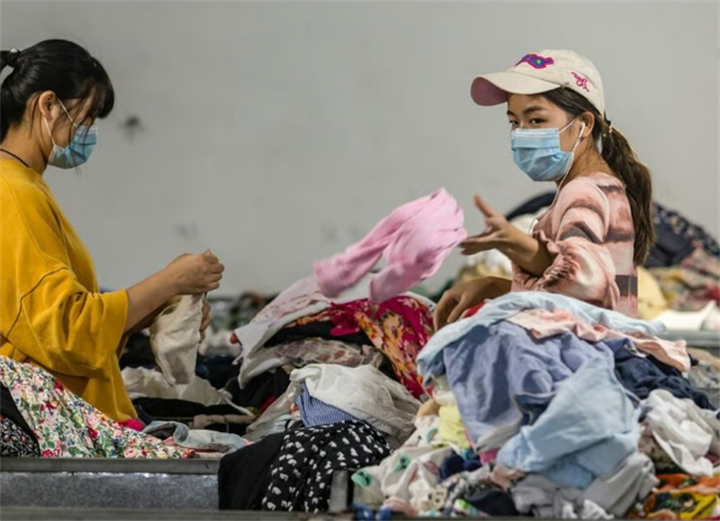
Non standardised products. Unlike new clothes, every bale of used clothes is a unique “blind box.” Sorters must rely on their eyes and experience to judge value – brand, style, fabric, stains, wear and tear. That means high labour costs. Even in more mechanised countries, fine sorting still depends heavily on human workers.
Information asymmetry and trust. In cross border trade, importers usually cannot open and inspect bales before paying. They have to trust the exporter‘s word. If a bale labelled “best summer mix” turns out to contain large amounts of unsellable winter clothes or damaged items, the importer can lose a lot of money. Stories of “one bad deal wipes out half a year’s profit” are not rare in this business.
Logistics and warehousing costs. Used clothes have low density and large volume. Shipping costs as a share of the final selling price are much higher than for many other goods. Recent swings in global freight rates have hit the thin margins of used clothing trade especially hard.
Lack of interest from big capital. Large investment firms rarely list secondhand clothing trade as a target sector. The reasons are understandable: the industry relies heavily on labour and logistics, scale effects are not strong, and policy risks are high. By contrast, fashion tech or sustainable materials fit the “high growth, scalable” story that capital prefers.
None of this means secondhand clothing trade has no value or future. But it does suggest that its opportunities are more like a field that needs careful cultivation, not a plain that can be quickly harvested.
What may happen in the next few years
Looking ahead three to five years, the global secondhand clothing trade could move along several paths.
Regulatory divergence and upgrading. The EU‘s EPR system will likely be fully implemented in the coming years. This may push brands to take part more actively in closed loop resale – that is, collecting and reselling or recycling their own products. Meanwhile, African countries may adopt more nuanced policies – for example, different tariff rates for different grades of used clothes, rather than simple bans or full openness.
Continued geo economic friction. The used clothing trade is essentially a transfer of waste. As developing countries speak more openly about “waste colonialism,” exporting countries may face greater moral and political pressure. Some nations may try to build regional secondhand trading networks – for example, recycling more used clothes within Africa or within Asia – to reduce dependence on intercontinental shipping.
Greater separation of business models. Two very different models already exist. One is high volume, low margin cross border trade, serving the most price sensitive consumers. The other is brand led, higher margin closed loop resale, such as outdoor brands’ “trade in” programmes or luxury platforms’ certified resale. The first is huge but thin profit; the second is smaller but more profitable. In the coming years, these two models may grow further apart, squeezing companies stuck in the middle.
An industry that needs more reflection
So where does your donated old T shirt actually go? There is no single answer. It may go to a place that needs cheap clothing – or to a landfill. It may create a day’s income for a market seller in Africa – or indirectly cost a local factory worker his job.
None of this denies the value of secondhand clothing trade. On the contrary, acknowledging these complexities is the starting point for a rational discussion. For consumers, a more responsible choice may not be to stop donating – donating is still one of the better ways to deal with used clothes – but to realise that buying less in the first place matters just as much as thinking about where clothes end up later.
No matter how efficient the secondhand trade becomes, it is essentially dealing with a problem that already exists – not preventing it at the source. And the scale and complexity of that problem are far bigger than any single participant – donor, recycler or policymaker – can solve alone.
Disclaimer: The data cited in this article come from public sources and third party research reports. Different sources may use different methodologies. The author and publishing platform make no guarantees about the absolute accuracy or completeness of the information. This article does not constitute investment or policy advice. Readers should make their own judgments.
About the Author
Clara Whitfield is a writer and data analyst specializing in global economics. Her approach is to connect macroeconomic data with the daily lives of ordinary people, using concrete stories to explain abstract trends. She has worked at international development agencies and financial media, covering topics such as trade, consumer behavior, and the labor market. She believes that a cup of coffee, an old piece of clothing, or a pair of sports shoes can all serve as an entry point to understanding the world economy.
References
[1] United Nations Comtrade Database, HS Code 630900 (worn clothing), trade data released in 2025
[2] Official Journal of the European Union, Regulation (EU) 2025/1892 amending Directive 2008/98/EC, published 26 September 2025
[3] Yale University, Meital Peleg Mizrachi & Ori Sharon, “Second thoughts on secondhand? Why the resale market is expanding fashion’s carbon footprint,” Yale News, 8 December 2025
[4] Pietra Rivoli, The Travels of a T Shirt in the Global Economy: An Economist Examines the Markets, Power, and Politics of World Trade, John Wiley & Sons, 2005 / 2014
[5] Research and Markets, “Secondhand Apparel Market – Global Industry Size, Share, Trends, Opportunity, and Forecast, 2021 2031,” January 2026
RELATED GUIDES

Manipulated Financial News Is Spreading. How Can You Spot Deepfake Information?
Deepfake technology is changing how financial information spreads—and how investors make decisions.
Trust Inflation: How to Spot AI-Forged Government Documents
Trust is an economic infrastructure. It lowers transaction costs. It lets strangers exchange value, sign contracts, and follow authority.
How to Spot Investment Scams That Pretend to Be from International Institutions?
Have you ever received a message from someone claiming to be from INTERPOL?They say a seized fund is waiting for you. All you need to do is pay a small “processing fee” first.
Can a National Digital ID Be Used at Airports or Banks in Another Country?
Digital IDs are becoming a reality in many countries.From U.S. mobile driver's licenses to the EU's digital wallet.From India's biometric travel system to South Korea's blockchain ID plan.