
Can Liveness Detection Stop AI-Generated Video Fraud?
June 6, 2026|⏱️~8minutes
By Nicholas Brennan
Last year, I spoke with a risk officer at a mid-sized European asset management firm. He asked a question that has stayed with me:
“What if one day, on my screen, I see my own face saying something I never said, authorizing a transfer I never made – how do I prove that wasn’t me?”
This question gets to a core assumption of modern finance: that we can reliably verify a person’s identity.
Events over the past two years suggest that assumption is under serious pressure.
1. The scale of the problem
First, we need to separate two different risk scenarios.
Scenario one: An attacker uses an AI-generated fake face video to try and pass identity verification – like logging in, registering, or approving a transaction.
Scenario two: An attacker uses a fake video for social engineering fraud – for example, impersonating a senior executive to instruct an employee to transfer money. The verification system is never touched.
Liveness detection directly addresses scenario one.
Scenario two is more about processes and training, and liveness detection does little to stop it.
How big is the risk?
Data shows that in the first quarter of 2025, confirmed direct financial losses from deepfake fraud exceeded $200 million globally.
Source: The World Economic Forum confirmed this figure in a 2025 report, as cited by multiple industry publications.
Many experts believe the real number is higher – many fraud cases go undetected or unreported. Some analysts note that deepfake losses are often grouped into broader categories like “authorized push payment fraud” or “account takeover fraud,” making precise tracking difficult.
It is also worth noting that the number of successfully blocked attacks is likely much larger than the number of successful ones. But because most organizations do not share detailed interception data, it is hard to assess the true balance between attackers and defenders.
2. Why traditional liveness detection is relatively easy to bypass
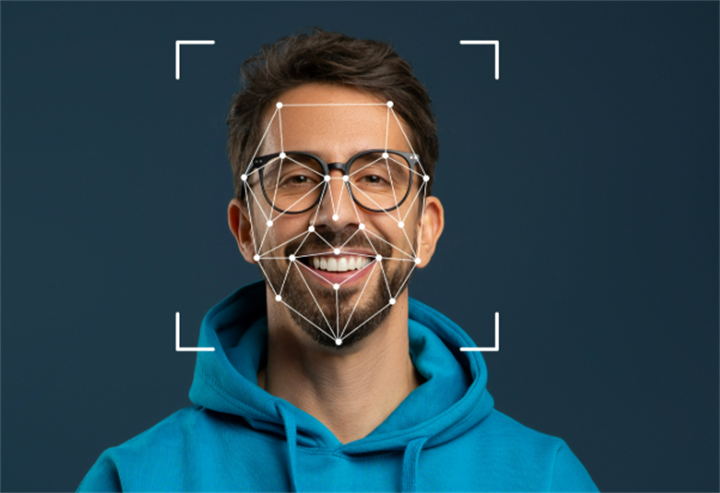
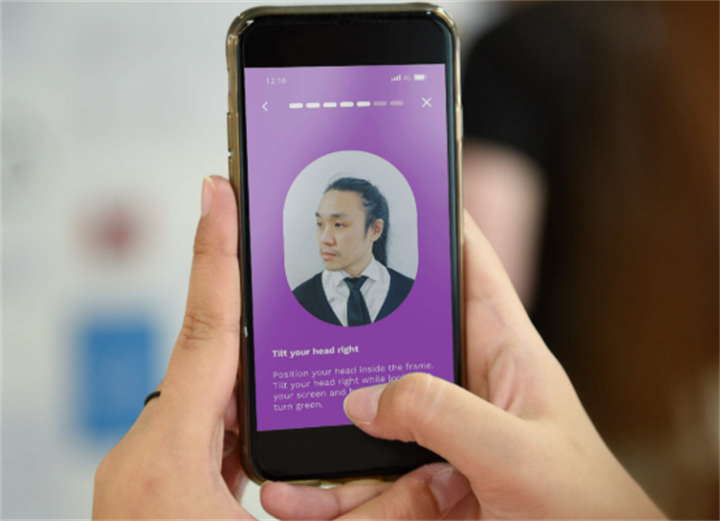
Early liveness detection worked on a simple logic: the system asks the user to perform an action (blink, shake head, open mouth), then checks if the action actually happened.
This worked against static photos or pre-recorded videos – a photo cannot blink, and a pre-recorded video cannot respond to a random instruction in real time.
But AI-generated video changed the game.
Researchers found that deep learning-based “face swap” models can generate realistic facial movements in real time. This means that if an attacker knows what actions the system will ask for, they can generate a fake video that includes those exact actions.
In March 2026, police in Qingdao, China, broke a case where attackers used AI to generate more than 50,000 dynamic face videos – complete with head shakes and blinks – and successfully bypassed the identity verification of several apps.
Source: CCTV News legal affairs program “Rule of Law Online,” March 16, 2026.
An even more sophisticated attack method is “injection attacks.” The attacker does not use a camera at all. Instead, they inject fake video data directly into the system’s image processing pipeline. From the system’s point of view, it “sees” a normal video stream – but the camera was never used.
Industry reports call this the “invisible ghost attack” because the system has almost no ability to detect it.
Trend assessment: Traditional “command-response” liveness detection is rapidly losing effectiveness against AI-generated dynamic content. This does not mean it is completely useless. But its reliability is no longer sufficient as a standalone verification method for high-risk scenarios.
3. The next generation of defense: what has improved?
Over the past two to three years, technology providers have developed multi-layered upgrades.
The core idea: move from “verify the action” to “verify physical properties.”
Near-infrared imaging + 3D depth sensing
A familiar example is the face unlock feature on some laptops. It does not use a normal RGB camera. It uses an infrared camera.
The camera actively emits near-infrared light (invisible to the human eye) and then analyzes how the face reflects it. According to Microsoft documentation, the system requires a false acceptance rate of less than 0.001% (one in 100,000).
Source: Microsoft official Windows Hello biometric requirements; TechTarget technical review.
Research shows that real skin reflects infrared light in a way that is fundamentally different from photos, screens, or silicone masks – because the difference is based on the physical properties of the material. AI cannot simulate that by adjusting pixels.
At the same time, depth sensors (like structured light) build a 3D model of the face. A flat photo has no depth information. Even a high-quality 3D mask will show subtle deviations in facial contours when compared to a real face.
Multi-modal passive detection
Some industry solutions use multi-modal fusion. Without requiring any active action from the user, they analyze three dimensions from a single frame of video: 2D texture, 3D depth, and biological activity (like tiny facial movements).
For example, NetEase Yidun’s DeepGuard system uses a learning-based model to amplify the differences between real and fake faces.
Source: NetEase Yidun official product documentation.
What about real-world results? According to tests cited by the provider, the upgraded solution increased AI face-swap detection recall from 62% to over 98%, with overall accuracy at 99.86%.
Source: Combination of NetEase Yidun official materials and industry tech reports.
A note of caution: these numbers come from specific test environments or vendor-published results. Real-world performance can vary depending on the application, hardware, and attack methods. Different independent tests may produce different accuracy figures.
Detecting traces left by AI generation
Another category of technology focuses on identifying artifacts that AI-generated content tends to leave behind. Examples include:
High-frequency noise analysis: AI-generated images often show unusual high-frequency noise patterns.
Temporal inconsistency detection: Fake videos sometimes show unnatural “glitches” in blink timing or facial movement smoothness.
Audio-video sync checks: AI face-swap plus voice clone attacks sometimes produce subtle mismatches between lip movement and sound.
My assessment: The latest generation of technology performs well in lab conditions. Hardware-based physical property verification is theoretically very difficult to bypass using pure software synthesis. But that does not mean it is “absolutely safe.” Attackers may still develop better hardware (like custom 3D masks) or more sophisticated injection techniques. Real-world performance remains to be seen over time.
4. A key limitation
No matter how advanced, liveness detection has an inherent limitation:
It verifies “is there a live person in front of the camera right now?” – but it does not verify “is this person’s current intent genuine?”
Example: A user successfully logs into their banking app after passing liveness detection. Later, they unknowingly answer a video call from a fake “bank customer service” agent generated by AI, who asks for a verification code.
Liveness detection was never triggered – because the fraud happened after the verification step.
Liveness detection is one link in the security chain, not the entire chain. Relying too much on a single technology creates a false sense of security.
Also, the level of technology deployed varies widely. High-security 3D + multi-modal solutions are significantly more expensive. Some smaller platforms may still use basic liveness detection.
Attackers tend to target the weakest link, not the strongest defense.
So the overall security of a system often depends on its least protected layer.
5. The shift in defense strategy
Industry practice shows that the effective response to AI-generated video fraud is shifting from “find the perfect technology” to “build multi-layer defense.”
A common framework includes the following layers:
Layer 1: Upgrade liveness detection itself.
Replace or supplement traditional command-response detection with multi-modal, passive, hardware-assisted solutions.
Layer 2: Introduce independent multi-factor verification.
Do not rely on “face” as the only key. For high-risk transactions, require voice verification, device fingerprinting, or push notification confirmations to a trusted enrolled device.
Regulators in several major economies – including some in Europe and Asia – have begun recommending that financial institutions adopt such “non-face” multi-factor methods.
Layer 3: Adjust verification intensity based on risk level.
Not every verification needs the highest level of security. Small, low-risk operations can use lighter verification. Large, unusual, or highly sensitive operations trigger stronger processes – even manual review.
Layer 4: Post-transaction detection and traceability.
Continuously monitor completed authorizations for abnormal behavior. If a deepfake fraud is detected after the fact, the system should be able to respond quickly – freeze funds and trace the attack source.
Trend assessment: In the coming years, the likely trend is not one technology “winning.” It is the fusion and dynamic orchestration of multiple verification methods. Liveness detection will continue to play an important role – but its role will shift from “the single gatekeeper” to “one of several layers of defense.”
6. Uncertainties and future questions
Before closing, a few uncertainties are worth watching.
The speed of attack evolution. For now, hardware-based physical feature detection (infrared reflection, 3D depth) seems like a difficult barrier for AI synthesis to cross. But could attackers develop new ways around it – like more realistic biomaterial masks, or adversarial samples that fool depth sensors? These possibilities are still theoretical or in early experiments, but they deserve ongoing attention.
The imbalance between cost and adoption. High-security multi-modal liveness detection solutions cost significantly more – both in hardware and computing power. Under market pressure, will enough organizations invest? If many smaller platforms continue using lower-standard protection, will attackers simply shift to those “soft targets” – eroding overall trust in the system?
The privacy-security trade-off. Stronger liveness detection often means collecting more biometric data (3D face models, infrared images). If that data leaks, the consequences are worse than a password leak – you cannot “change” your face. How to improve security while minimizing privacy risks and ensuring transparent, auditable data handling is a difficult problem that is not fully solved.
Conclusion
Back to the original question: Can liveness detection stop AI-generated video fraud?
The objective answer is:
The latest generation of liveness detection has significantly improved the ability to counter AI-generated video fraud – especially hardware-assisted, multi-modal solutions. Under specific deployment conditions, it can achieve a relatively high level of interception.
But equally important to note:
It is not a silver bullet;
It should not be the only solution;
A more practical approach is to embed it into a multi-layer defense system, and continuously monitor how attack techniques evolve.
For financial institutions and organizations that rely on digital identity verification, a more useful way to think might be:
Instead of asking “can this technology stop all attacks,” ask “after deploying this technology, how much cost and effort does an attacker need to succeed?”
When the cost of an attack is higher than the potential reward, most attackers will move on to easier targets.
This battle will not stop. Technology will keep raising the bar for attackers. But “absolute security” may always be an ideal, not a realistic goal.
Recognizing that is not pessimism. It is a more practical starting point.
Disclaimer
This article is based on the author’s analysis and interpretation of public research, industry reports, and technical documentation. It is for discussion and reference only.
The technical data, case examples, and trend assessments come from the sources cited throughout the text. This does not constitute investment advice, procurement recommendations, or security strategy guidance.
The field of financial security technology and threats continues to evolve. Readers should consult professional advisors before making business decisions.
References
[1] Hong Kong $256M deepfake fraud case – CNN report, February 4, 2024; Hong Kong police press conference.
[2] Qingdao 50,000 dynamic face video case – CCTV News “Rule of Law Online,” March 16, 2026.
[3] Q1 2025 deepfake fraud loss figures – World Economic Forum 2025 report “Why detecting dangerous AI is key to maintaining trust”; Oscilar industry analysis.
[4] Sumsub 2025 Identity Fraud Report – Cited by Digital Watch Observatory, November 2025.
[5] Windows Hello biometric requirements – Microsoft official documentation; TechTarget technical overview.
[6] NetEase Yidun DeepGuard technical solution – NetEase Yidun official product documentation; industry technology reports.
[7] Purdue University deepfake detection research – Incode press release citing Purdue study, December 2025.
[8] iOS 18.3.1 security update – Apple official release, February 2025.
About the Author
Nicholas Brennan is a long-term observer and writer in the field of fintech. Over the past decade, his work has focused on global payment systems, digital currencies, and the modernization of bank core systems. He is skilled at translating complex underlying technical logic into clear business narratives. He has served as a technical and strategic advisor at several international financial institutions and consulting firms. Currently, he mainly writes in-depth analyses for industry publications, tracking how financial infrastructure is evolving globally.
RELATED GUIDES

How far has offline payment technology come in 2026?
A few years ago, "offline payments" was a concept that confused many in finance.Digital, by default, meant connected. You go online to record a transaction. Paying without internet sounded like a paradox.
Reverse Mortgage Scams Around the World: Why Seniors Keep Becoming Targets
You may have heard of “reverse mortgages” or “equity release.”They allow older homeowners to turn part of their home‘s value into cash, while still living in the house.
Why Haircuts Keep Getting More Expensive in Developed Countries: The Economic Logic of Non-Tradable Services
Over the past two decades, the cost of a haircut in developed countries has consistently outpaced overall inflation. I
The Shift from Heels to Sneakers – A Small Reflection of Changing Social Mindsets
In recent years, a noticeable change has appeared on city streets, in offices, and on public transport across the globe: more women are wearing sneakers, and fewer are wearing high heels.