
The Shift from Heels to Sneakers – A Small Reflection of Changing Social Mindsets
————When Heel Heights Dropped – The Economic and Social Signals Behind a Consumer Shift

June 13, 2026|⏱️~8 minutes
By Clara Whitfield
In recent years, a noticeable change has appeared on city streets, in offices, and on public transport across the globe: more women are wearing sneakers, and fewer are wearing high heels. This trend has lasted for years and is backed by multiple sources of consumer data.
This raises a question: is this shift simply a matter of changing fashion tastes, or does it reflect deeper economic and social changes?
This article argues that the move from high heels to sneakers is not just about changing aesthetics or a simple story of "self-awakening." It is also driven by economic cycles, changing workplace environments, and personal income expectations. Rather than a fashion revolution, it looks more like a set of economic signals in action.
1. A Few Data Points to Read Carefully
The global footwear market as a whole continues to grow, but different categories are moving in opposite directions.
The high heel market has shown signs of decline. One industry forecast from November 2025 estimated that the global high heels market would shrink slightly from around $6.21 billion in 2025 to about $6.12 billion by 2033, a compound annual growth rate of -0.19%.
The sneaker and athleisure market has grown much faster. The global athleisure market was valued at over $425 billion in 2025 and is expected to expand at a compound annual growth rate of 9.2% through 2034.
Looking at specific brands: On Holdings reported net sales of 3.014 billion Swiss francs in fiscal 2025, up 30.0% year over year. HOKA's net sales reached $2.233 billion in fiscal 2025, a 23.6% increase. Crocs generated over $4 billion in revenue in 2025. Birkenstock reported €2.1 billion in revenue in fiscal 2025, up 16%.
This is not because heels are hard to find. According to retail data from research firm Edited, high heel inventory in 2017 was up 28% from the previous year. Inventory grew, but consumers stopped buying. That is an active choice.
2. The "Heel Economy": An Empirical Observation
For decades, researchers at IBM and other institutions have tracked a correlation: women's heel height tends to move inversely with the health of the economy.
During economic booms and tight job markets, women are more likely to wear heels and more formal clothing. During economic slowdowns, rising job pressure, and uncertain income expectations, flats and casual wear become more common.
The logic behind this is not hard to follow. In expansionary periods, business activity is frequent and workplace dress codes are stricter. In contractionary periods, business travel and events decrease, and companies relax appearance requirements. Meanwhile, when future income feels uncertain, consumers cut back on costly "image maintenance" items — including expensive heels and the matching beauty services.
IBM's multi decade tracking of this trend provides an empirical foundation for this observation.

3. On the Employer Side: Why Dress Codes Loosened
During economic expansions, many industries — finance, consulting, law — have high expectations for professional appearance. These standards are not just about company culture; they are also seen as a way to signal competence to clients.
As the macro environment changed — slower growth, rising cost pressures, fewer in person business events — companies began rethinking which rules were truly necessary. Dress codes were often the first to be relaxed.
In recent years, more and more companies have revised their employee appearance guidelines to explicitly allow sneakers and flats in the workplace. Several airlines have also changed their rules to permit female flight attendants to wear flats while on duty.
In short, the "freedom" to wear sneakers at work comes in part from employers actively or passively lowering the pressure to dress formally.
4. On the Individual Side: Cost, Commute, and Priorities
From the consumer's perspective, several practical factors may explain changes in the shoe closet more than pure "aesthetic beliefs."
First, the demands of commuting and daily activity. In large cities, many working people walk, transfer between subway lines, and stand during their commute. High heels are highly impractical in these settings. Sneakers are often the only sensible choice.
Second, the cost of maintaining a polished appearance. A good pair of heels, a well fitted suit, regular manicures and hair care – these add up to a significant expense. When income growth slows and the future feels uncertain, consumers tend to treat "image maintenance" as a flexible, compressible expense.
Third, the allocation of time and energy. As Beth Goldstein, an analyst at the NPD Group, said in a 2018 interview: "Comfort is becoming a consumer basic need because everyone is so busy and constantly on the go."
Taken together, these factors point to a conclusion: the decline in high heel spending is, to a significant degree, a pragmatic, cost driven adjustment in consumer budgets.
5. The Limits of Cultural Narratives
Cultural shifts also matter.
Over the past decade, public discussion around women's bodily autonomy, anti appearance anxiety, and workplace gender equality has increased notably. Social movements like #MeToo have had measurable effects on consumer behavior.
A 2024 study by INSEAD Business School found that in the short period following the outbreak of the #MeToo movement, stockout rates for "stereotypically feminine" products — such as pink high heels — fell by about 14.4%. This change correlated with social media discussion intensity across the countries studied.
At the same time, multiple medical and podiatry professionals have pointed out that frequent wearing of ill fitting high heels can have negative effects on foot health. Heels shift the body's center of gravity and increase pressure on the forefoot. Long term use has been linked to plantar fasciitis, bunions, and knee osteoarthritis.
Both forces — cultural change and economic pressure — exist and reinforce each other. Cultural shifts provide the reason to stop wearing heels; economic pressure provides the real world condition to actually stop. Neither factor alone would likely explain the speed and scale of the change over the past few years.
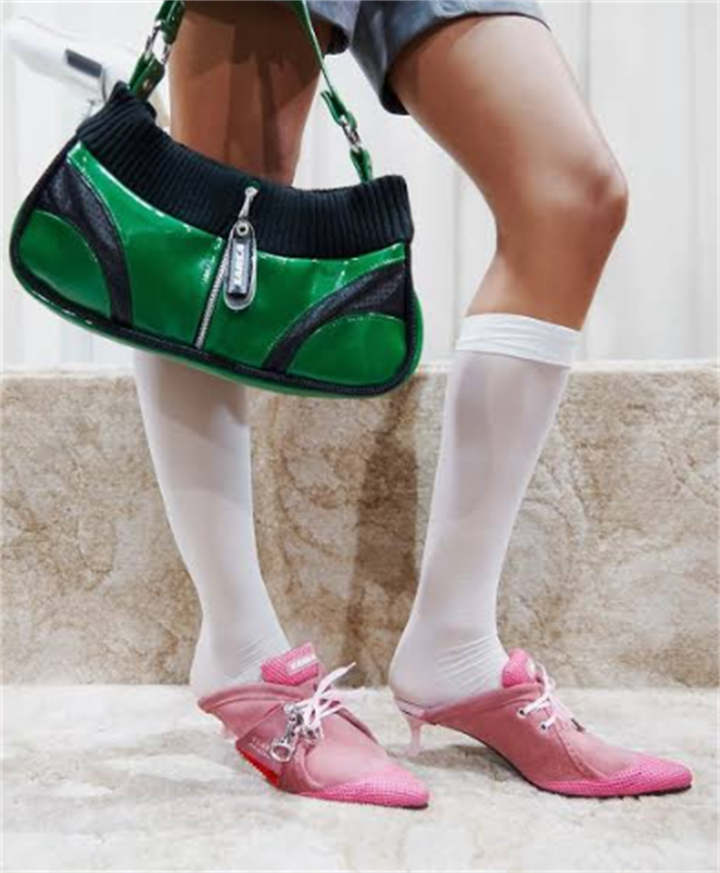
6. A Counter-Example: Why Some Settings Still Require Heels
If comfort and casualization were an irreversible trend, how do we explain industries that still insist on formal dressing?
High end clubs, luxury hotels, private banquet services, and certain emotion driven service industries still require employees to wear heels, formal dresses, and full makeup.
In this counter example, appearance itself is part of the service being sold. Consumers pay a premium for it, and businesses are willing to cover the cost.
This actually supports the core argument: dress choices are not purely personal preferences; they are "priced" in specific economic relationships. When appearance directly affects income — as in service industries — formal dressing remains. When appearance no longer directly affects economic returns — as in most office jobs — people choose what is more comfortable and economical.
Thus, the "sneakers replacing heels" phenomenon occurs mainly in settings where appearance is no longer strictly priced. This does not mean aesthetic standards have disappeared. It means the social and economic conditions attached to those standards have changed.
7. A Few Trends Worth Watching
If you follow consumer market trends, here are a few dimensions worth keeping an eye on.
First, will the correlation with economic cycles reverse? If the global economy enters a new expansion phase — with tighter job markets and rising income expectations — will sneakers keep their share, or will heels partly return? There is no answer yet, but it is worth watching.
Second, is there a real generational difference? Some argue that Generation Z's rejection of high heels comes from more exposure to "body positive" and "anti gaze" cultural content. But another possibility is that they entered the workforce exactly when economic growth slowed, making their choices more a rational response to the economic environment than a deep value shift. Current research does not yet clearly separate these two explanations.
Third, is "comfort" becoming a new luxury signal? Brands like Birkenstock and Crocs are not cheap, but the "comfort" and "relaxed" vibe they represent have become a new kind of social signal. This is different from traditional luxury, which relies on scarcity, refinement, and ritual. Whether this new signaling system will survive an economic recovery is an open question.
Conclusion
Let's return to the opening question: what does the decline of high heels and the rise of sneakers really mean?
It looks less like a banner declaring a new ideology and more like a mirror reflecting changes in economic cycles, workplace conditions, and personal budget constraints. Cultural awakening is real, and it provides a reason. Economic pressure is real, and it provides the condition. Together, they have produced the consumer picture we see today.
The next interesting window to watch: what will happen in women's shoe closets when the economic cycle turns again? That is a question only time and data can answer.
About the Author
Clara Whitfield is a writer and data analyst specializing in global economics. Her approach is to connect macroeconomic data with the daily lives of ordinary people, using concrete stories to explain abstract trends. She has worked at international development agencies and financial media, covering topics such as trade, consumer behavior, and the labor market. She believes that a cup of coffee, an old piece of clothing, or a pair of sports shoes can all serve as an entry point to understanding the world economy.
Disclaimer:
This article represents the author's personal views only and does not constitute any investment or consumption advice. The market data cited come from publicly available industry reports, and data methodologies may vary across sources. Some figures are industry forecasts and actual outcomes may differ due to changing economic conditions. The author accepts no responsibility for decisions made based on this content.
References
[1] INSEAD, Bellet, C., Dubois, D., & Godart, F., "Do Consumers Respond to Social Movements? Evidence from Gender-Stereotypical Purchases After MeToo", Management Science (2024)
[2] NPD Group's Retail Tracking Service, U.S. footwear sales data, as reported by CNBC and other media outlets (2017–2018)
[3] Deckers Brands, Annual Report 2025 (HOKA financial results)
[4] Crocs Inc., Annual Financial Results 2025
[5] Birkenstock Holding, Fiscal Year 2025 Earnings Report
[6] On Holding, Full Year 2025 Financial Results
[7] Capri Holdings Limited, Fiscal Year 2025 Financial Disclosures (Jimmy Choo results)
[8] American Orthopaedic Foot & Ankle Society (AOFAS), public health statements
[9] IBM, long-term footwear trend research (as cited in industry sources)
RELATED GUIDES

Where in the world is moving away from the US dollar for trade settlements?
One popular story says many countries are joining forces to replace the US dollar with the yuan, the ruble, the rupee, or even gold.
Trust Inflation: How to Spot AI-Forged Government Documents
Trust is an economic infrastructure. It lowers transaction costs. It lets strangers exchange value, sign contracts, and follow authority.
Reverse Mortgage Scams Around the World: Why Seniors Keep Becoming Targets
You may have heard of “reverse mortgages” or “equity release.”They allow older homeowners to turn part of their home‘s value into cash, while still living in the house.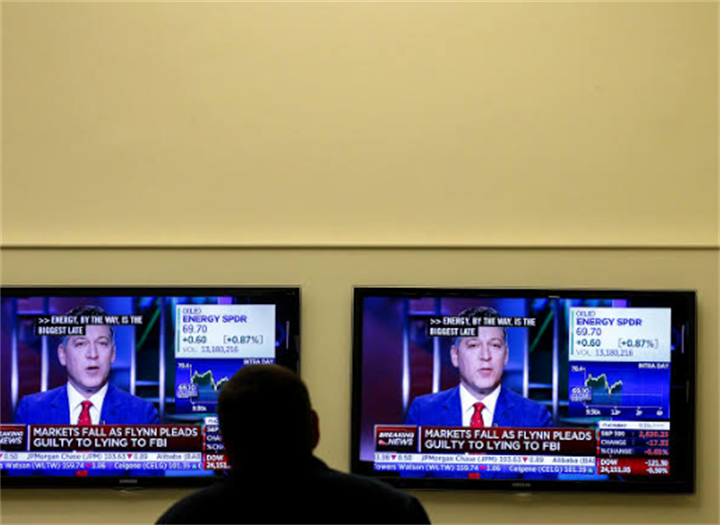
Manipulated Financial News Is Spreading. How Can You Spot Deepfake Information?
Deepfake technology is changing how financial information spreads—and how investors make decisions.