Why Global Coffee Prices Keep Fluctuating in 2026: Climate, Logistics, and Policy All Play a Role
June 16, 2026|⏱️~12 minutes
By Clara Whitfield
Arabica futures once hit an all time high of $4.30 per pound. Robusta also surged to $5.81 per kilogram in March 2025. But by the spring of 2026, the price narrative started to turn.
In early June, ICE Arabica futures for July delivery fell to 245.9 cents per pound, falling for six consecutive sessions. On June 8, the market hit clear resistance around 250 cents. Robusta July futures also failed to hold above $3,350 a ton.
If you are a coffee drinker, you might think this means “coffee is about to get cheaper.”
But as a market observer, I have to say – that idea is probably too optimistic. The coffee market in 2026 looks like it is shifting from “bull” to “bear” on the surface, but underneath, things are still turbulent. This is not a single story supply story. It is a tangled mix of climate, logistics, and policy.
1. Climate: The Most Fundamental – and Most Unpredictable – Factor
Coffee is a sensitive crop. Arabica especially – it grows best in relatively cool highlands with clear day night temperature differences. When temperatures rise, rainfall patterns become irregular, or extreme weather hits, flowering and fruit development suffer.
In recent years, weather in major coffee regions has been unstable.
Brazil’s numbers tell the story best.
According to a USDA report published in June 2026, Brazil’s total 2026/27 crop is forecast at a record 71.9 million bags (60 kg each), up 14.1% year on year. Arabica alone is expected at 47.5 million bags, a 25% jump – near the peak levels of 2018 and 2020.
On paper, that is great news. But there is a catch: a production forecast is not the same as actual output.
The USDA report notes that Brazilian exporters are not rushing to sign long term sales contracts despite the optimistic forecast. They are waiting for more clarity on the weather, especially the risk of El Niño. The U.S. Climate Prediction Center puts the probability of El Niño developing in the second half of 2026 at over 80%.
If El Niño does materialise, it could bring heat or irregular rain during Brazil’s critical growing period, hurting both the current harvest and next year’s flowering.
Another key point is inventories.
USDA data show that global coffee ending stocks have fallen for five consecutive years, from about 32 million bags in 2020/21 to roughly 20.1 million bags in 2025/26. At such low stock levels, even a small rise in weather uncertainty can cause noticeable price swings.
Vietnam also matters.
According to the USDA’s December 2025 report, Vietnam’s 2025/26 crop recovered to 30.8 million bags, up about 2.7% year on year. But coffee acreage is being squeezed by other crops, such as durian. Long term, Robusta’s supply growth potential is limited.
Colombia’s 2025/26 crop, meanwhile, fell to 13.8 million bags due to excessive rain.
An April 2026 analysis by GlobalData argues that climate change is pushing up the cost of coffee production across the board, and that higher prices are becoming a more frequent reality – not just a short term shock.
Extreme heat, drought, unusual rainfall and pests are hitting both Arabica and Robusta at the same time. In the future, coffee is likely to be more expensive not because of a one time spike, but because the baseline price is moving higher.
2. Logistics: The Overlooked Cost Amplifier
Coffee is one of the most traded agricultural commodities. Anything that raises shipping costs or delays delivery will eventually show up in the price you pay.
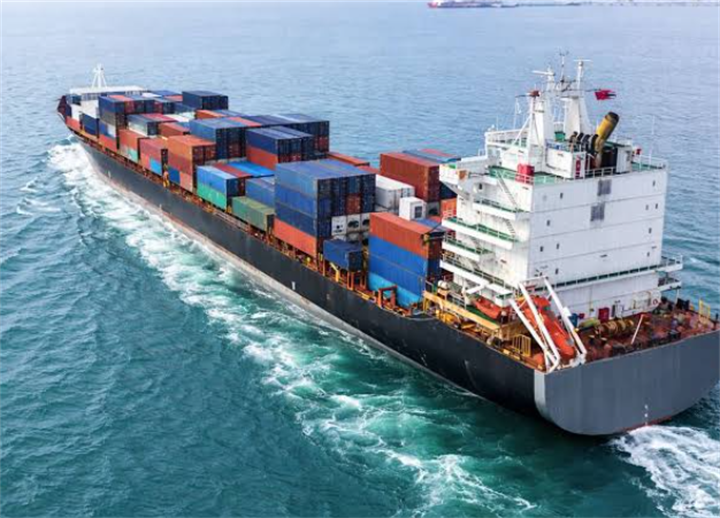
In March 2026, an escalation of conflict in the Middle East hit global shipping hard.
According to a March 6, 2026 report by Cailian Press, vessel traffic through the Strait of Hormuz almost stopped. About 11% of global seaborne trade passes through that strait. Many shipping lines started charging “emergency conflict surcharges” of $1,000–$3,000 per container.
Freight rates to Red Sea ports climbed from about $3,000 per container to around $10,000.
As reported by Qahwa World on March 5, 2026, ships diverted around the Cape of Good Hope, adding 10–14 sailing days between Asia and Europe.
Higher freight costs are only part of the story. More importantly, when shipping times become unpredictable, importers tend to stock up early or pay a premium to secure “spot” coffee. This “paying for certainty” behaviour pushes up cash prices quickly.
Fertiliser costs have also risen. The Middle East is a major exporter of nitrogen fertilisers. The conflict caused urea prices to spike. Fertiliser is a key input for coffee farming. So even if weather normalises, production costs may stay higher than historical levels because fertiliser is more expensive.
On the flip side, if the Red Sea crisis eases and the Suez Canal route reopens normally, freight rates could fall significantly. That would be good news for coffee importers and eventually for consumers. But as current market conditions show, there is a big gap between “could happen” and “is happening.”
3. Policy: Two Opposite Forces Reshaping Supply Chains
Policy has become a more complex driver of coffee prices in 2026.
First, the EU Deforestation Regulation (EUDR).
This law requires that coffee sold in the EU must be accompanied by proof that its production did not involve deforestation after 2020. In December 2025, the EU Council formally approved a revision postponing the compliance deadline to December 30, 2026, with an extra six months for small operators.
In May 2026, the European Commission released a further simplification proposal, including an expansion of the product scope to cover soluble coffee and similar products.
Industry estimates suggest that only about 20% of global coffee growing areas can fully meet EUDR requirements today. Policy uncertainty has led some importers to buy compliant coffee earlier than needed, pushing up prices.
Second, China’s zero tariff policy for certain African countries.
Effective May 1, 2026, China removed import tariffs on goods – including coffee – from 53 African nations with which it has diplomatic ties. For example, the tariff on unroasted coffee beans from Kenya dropped from 8% to zero; for Uganda, the 15% most favoured nation rate was eliminated.
Industry insiders estimate the policy could lower final coffee prices in China by about 10%.
These two policies pull in opposite directions. The EUDR raises the supply barrier. China’s zero tariff move lowers a trade barrier. Both are affecting the global coffee market at the same time, making price trends harder to read.
US trade tariffs also had a temporary impact. Between August and November 2025, the U.S. imposed high tariffs on Brazilian coffee. Brazilian coffee exports to the U.S. plunged 55% year on year during that period. Germany replaced the United States as the top destination for Brazilian coffee in 2025. The tariffs were largely removed by the end of November 2025.
In June 2026, the USTR proposed a 25% tariff on goods from Brazil, but coffee was listed as an exemption. No tariff has been officially imposed yet.
4. Where Prices Actually Stand
To get a clear picture of current price levels, we can look at data from the International Coffee Organization (ICO) for March–April 2026.
The ICO composite indicator for Arabica was in the range of 273 to 297 cents per pound. Robusta in London was around $3,400 per ton. Both are well above the low levels of 2016–2019, but below the record peaks of 2025.
However, retail coffee prices do not move one to one with futures.
The cost of the green coffee bean is only a small part of a finished cup – especially for milk based or flavoured drinks. Rent, labour, packaging and logistics often make up a much bigger share. So when bean prices rise 20%, a latte may only go up 5% or less, and the pass through can take six to twelve months.
For daily coffee drinkers, the more noticeable changes may not be menu price hikes, but rather:
Fewer discount coupons;
Slight changes in blend recipes;
Temporary unavailability of certain single origin beans;
These signs often tell you more about supply chain pressure than the official price tag.
Based on an analysis of commodity prices from January 2016 to September 2025, the coffee cost pressure index remains far above its long term average.
A simple rule of thumb: only when Arabica prices stay sustainably below 150 cents per pound, and energy prices fall significantly, will retail coffee prices have a real chance of coming down. Neither condition is met today.
5. Outlook: Volatility Will Persist, Structure Is Changing
Looking to the second half of 2026 and into 2027, most research houses point in the same direction: prices are unlikely to fall in a straight line, but will likely stay in a high range, choppy pattern.
The World Bank’s Commodity Markets Outlook forecasts Arabica prices to drop about 13% in 2026 and a further 5% in 2027, with Robusta falling roughly 2% per year. Rabobank expects ICE Arabica futures to end 2026 in a range of $2.50–$3.00 per pound.
StoneX raised its Brazil 2026/27 production estimate to a record 75.3 million bags in March 2026. The USDA projects a supply surplus of about 10 million bags for the 2026/27 season – the largest in six years.
But all these forecasts share a common hidden assumption – normal weather, recovered logistics, stable policy. In reality, each of these three conditions is uncertain.
What deserves more attention is the structural change in the market.
Coffee supply is moving away from the old “weather driven” model toward a new framework that depends more on traceability, compliance and supply chain resilience. In this new framework, suppliers and brands that can reliably deliver traceable, compliant, consistent coffee will gain significant pricing power.
Conclusion
The sustained volatility of global coffee prices in 2026 is not caused by any single factor.
Climate shocks are turning from sporadic events into a systemic cost.
Logistics disruptions have added an uncertainty premium to supply chains.
Policy changes are reshaping the market from both the supply barrier and trade flow directions.
The expectation of larger crops does offer a reason for prices to ease. But low stocks, climate risks and geopolitical uncertainty together form an opposing force.
For the foreseeable future, coffee markets will likely stay in “high range volatility” – prices will not go back to the lowest levels of the past decade, but neither will they return to the extreme peaks of 2025.
For everyone who drinks coffee, this might mean a simple truth: coffee has become more expensive, and also more complex. In every cup’s price, you can find a bit of Brazil’s rainfall, a detour around the Red Sea, a regulation out of Brussels, and the whole industry’s bet on uncertainty.
Disclaimer:
This article is for informational and educational purposes only and does not constitute financial advice or investment recommendations. Commodity markets involve substantial risk. The views expressed are solely those of the author. Past price movements do not guarantee future results. Readers should consult their own advisors before making any decisions.
About the Author
Clara Whitfield is a writer and data analyst specializing in global economics. Her approach is to connect macroeconomic data with the daily lives of ordinary people, using concrete stories to explain abstract trends. She has worked at international development agencies and financial media, covering topics such as trade, consumer behavior, and the labor market. She believes that a cup of coffee, an old piece of clothing, or a pair of sports shoes can all serve as an entry point to understanding the world economy.
References
[1] U.S. Department of Agriculture (USDA). Brazil: Coffee Annual, Foreign Agricultural Service, June 2026
[2] U.S. Department of Agriculture (USDA). Coffee Summary, Foreign Agricultural Service, December 2025
[3] StoneX Group Inc. Brazil 2026/27 Coffee Production Estimates*, March–May 2026
[4] The World Bank. Commodity Markets Outlook, April 2026
[5] International Coffee Organization (ICO). Monthly Market Reports, March–April 2026
[6] GlobalData. Climate Change and Coffee Price Volatility, April 2026
[7] European Commission / Council of the EU. EU Deforestation Regulation (EUDR) Implementation Updates, 2025–2026
[8] Qahwa World. War Redraws Global Shipping Map and Pressures Coffee Supply Chains, March 5, 2026
[9] Cailian Press. Middle East Route Freight Soars; Foreign Shipping Lines Impose Emergency Conflict Surcharges, March 6, 2026
[10] Eastmoney / Jiemian News. Germany Replaces US as Top Destination for Brazilian Coffee, January 21, 2026
[11] Various Chinese state media (People’s Daily, CNR, Henan Daily, etc.). China Africa zero tariff policy implementation reports, May 2026
RELATED GUIDES

Trust Inflation: How to Spot AI-Forged Government Documents
Trust is an economic infrastructure. It lowers transaction costs. It lets strangers exchange value, sign contracts, and follow authority.
After the Gold: The Hidden Economics of Olympic Venues
When the Olympic flame goes out and the world’s media pack up and leave, host cities are left with a very real problem. What do you do with venues that cost billions to build?
Where in the world is moving away from the US dollar for trade settlements?
One popular story says many countries are joining forces to replace the US dollar with the yuan, the ruble, the rupee, or even gold.
How far has offline payment technology come in 2026?
A few years ago, "offline payments" was a concept that confused many in finance.Digital, by default, meant connected. You go online to record a transaction. Paying without internet sounded like a paradox.