How far has offline payment technology come in 2026?
June 11, 2026|⏱️~ 8minutes
By Nicholas Brennan
A few years ago, "offline payments" was a concept that confused many in finance.
Digital, by default, meant connected. You go online to record a transaction. Paying without internet sounded like a paradox.
But in 2026, that has changed.
A survey by the Bank for International Settlements (BIS) found that nearly all central banks see offline payments as "important" or "very important" (Source: BIS Project Polaris report, 2023).
A consensus is forming: if digital cash can't be used without a network, it's not really cash.
This article looks at where offline payment technology stands today – and the real challenges ahead.
Why offline payments suddenly matter
Here's a simple reason.
Cash has one key advantage that digital payments haven't fully matched: it needs no infrastructure.
You hand over a banknote for coffee. No bank authorization. No internet signal. Not even electricity.
That convenience becomes a lifeline during natural disasters, cyberattacks, in remote areas, or even just an underground parking lot with no signal.
Central banks have realised: a CBDC that works only online is just a faster payment tool, not digital cash. Offline capability is the dividing line.
Different countries have different motivations.
Some focus on financial inclusion – letting people in rural or poorly connected areas use digital payments.
Others care more about resilience – the economy shouldn't stop if there's a major network outage.
And some see offline features as necessary to compete with cash. If digital money can't do what cash does, why would anyone switch?
These different drivers explain the varied global landscape today.
How offline payments work – a simple explanation
Start with an old analogy: a cheque.
Imagine you have a chequebook. Each cheque has your private stamp. Even if you can't reach the bank, you can hand a signed cheque to a shopkeeper. Later, the shopkeeper takes it to the bank. The bank verifies the stamp and moves the money.
As long as the stamp can't be faked, the cheque is physically trustworthy.
Offline payments work the same way, but the "cheque" is replaced by encrypted data on your phone.
Here's the process:
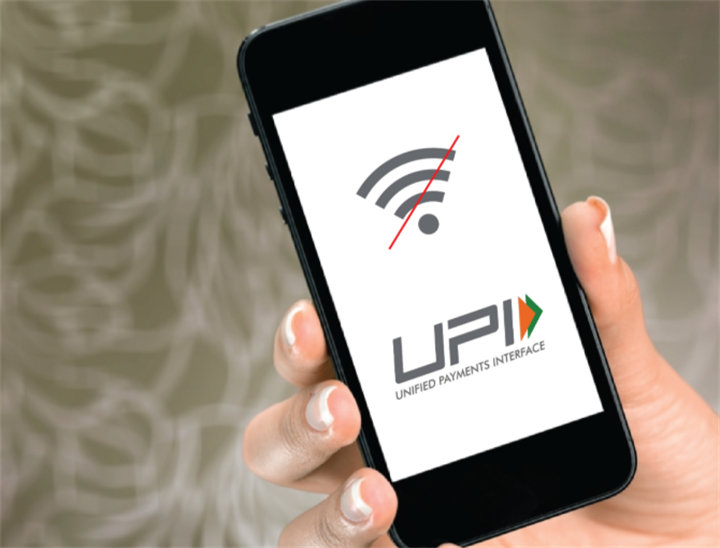
When you're online, the central bank sends an "electronic voucher" to your phone. Think of it as locking a certain amount of money on your device.
When neither you nor the merchant has a signal, your phones exchange information via NFC or Bluetooth (a tap). Your phone deducts the amount from its local ledger. The merchant's phone records the income.
As soon as either phone reconnects to the internet, the transaction data is uploaded to the central bank. The bank verifies it and completes the settlement.
Three key points:
First, it doesn't need a live network. As long as the two devices can physically connect, the transaction works.
Second, the local data is strongly encrypted. Trying to fake the balance by tampering with your phone's clock is virtually impossible.
Third, a common worry: can someone screenshot your payment code and keep using it? No. The code refreshes every minute and becomes invalid after a single use. A screenshot is useless.
This system has been tested in real-world deployments. Industry reports say that in China's e-CNY pilot, dual-offline payment has been rolled out to millions of terminals.
Of course, there are trade-offs. It requires significant engineering in secure chips, key management, and reconciliation. And it's mainly used for small-value transactions. Large-value offline payments remain a challenge.
Three major economies, three different paths
China: fast rollout, security first
Public information suggests China is the only major economy that has put dual-offline payments into large-scale real-world use.
On January 1, 2026, e-CNY got a major upgrade – wallet balances began earning interest at current deposit rates. Reports put the rate around 0.05%, with slight variations across operators. That's a global first for a retail CBDC.
One reason this was possible: the "cash-like" infrastructure – including offline payments – was already largely in place.
The latest official figures from the People's Bank of China (as of November 2025) show:
l 3.48 billion transactions
l 16.7 trillion yuan (about US$2.3 trillion) in total value
l 230 million personal wallets, and 18.84 million corporate wallets
A note: these figures cover all retail scenarios. How much of that value comes specifically from offline payments is not publicly broken out. But judging by the rollout of hardware wallets – tens of thousands of SIM-card-style wallets in some pilot areas – offline functionality is clearly seen as a core selling point.
The Chinese model is "security and rollout first." Privacy is designed as "small amount anonymous, large amount traceable." Fully anonymous offline transactions are not planned.
That choice has practical reasons: it helps anti-money laundering and gains support from traditional banks. The trade-off is that privacy-focused users may find it less appealing.
Europe: privacy first, slow and careful
The European Central Bank's approach is almost the opposite.
Public statements from ECB officials say the goal for the digital euro is to make offline transactions "completely untraceable" by the Eurosystem – anonymity on par with cash (Source: ECB board member Piero Cipollone, Süddeutsche Zeitung, Jan 2026).
That is technically demanding. True anonymity means transaction data cannot contain any identifiable user information – while still preventing double-spending fraud.
The plan: users pre-download a certain amount of digital euros onto their phone or a physical card. Payments happen offline, peer-to-peer.
The big selling point is privacy. Surveys show a significant share of Europeans support the digital euro precisely because of this feature.
But the road is bumpy.
Researchers at the Deutsche Bundesbank published a paper in January 2026 stating frankly that double-spending during offline periods cannot be completely eliminated. Moreover, highly anonymous offline transactions could pose greater money laundering risks than cash (Source: Deutsche Bundesbank / arXiv, Jan 2026). A BIS report has echoed that warning.
Perhaps that's why the timeline keeps slipping. According to the ECB's latest announcement (June 2026), a pilot may start in the second half of 2027, with a potential launch no earlier than 2029.
This caution shows Europe's commitment to privacy. But it also means Europe may temporarily fall behind faster-moving economies.
The US: official absence, market filling the gap
The US stands apart. At the federal level, there is no clear plan to issue a CBDC.
The Federal Reserve has repeatedly said that FedNow is a real-time payment system, not a digital currency. Without explicit congressional authorisation, the Fed will not issue a digital dollar. In early 2026, a cross-party bill was even proposed to ban the Fed from issuing a CBDC until 2030.
Behind this "non-action" is a structural reality. The US dollar is already the world's dominant currency. Existing payment infrastructure – ACH, FedWire, credit card networks, and private stablecoins – already covers most needs.
From a policymaker's perspective, no urgent need means no reason to take the risk of reshaping currency.
But that doesn't mean offline payments are ignored in the US. The private sector is stepping in.
Some tech companies have launched offline hardware wallet solutions based on secure chips. In 2025, OfflinePay launched a network aiming to let people in poorly connected areas make peer-to-peer stablecoin payments with ordinary smartphones – no internet required.
These efforts are still small. But they point to a trend: market-driven offline payment technology may mature from the bottom up, eventually putting pressure on official policy.
The unsolved problems: double-spending, regulation, user habits
Despite technical progress, offline payments still face several stubborn challenges.
First, double-spending.
Online, a central ledger prevents this in real time. Offline, that real-time verification is gone.
The mainstream approach today is "risk mitigation": set low transaction limits, restrict the number of offline uses, and rely on post-hoc reconciliation to detect and trace fraud.
In other words, you don't technically eliminate the possibility of double-spending. You contain the risk to an acceptable level. Academics still debate this, but in engineering practice, it's the most realistic trade-off.
Second, the clash between privacy and regulation.
The more anonymous an offline transaction is, the harder it becomes to fight money laundering and terrorist financing. BIS research has made this clear.
There is no widely accepted best practice for balancing user privacy and illegal fund flows. Different countries will likely give different answers – and that will affect cross-border compatibility.

Third – and perhaps most fundamental – do users really need offline payments?
In most urban areas, mobile network coverage is close to 100%. Even spotty elevators or underground garages often have Wi-Fi or micro-cells.
For the vast majority of daily transactions, "offline" is an emergency backup, not a frequent need.
Surveys suggest people are attracted to digital cash partly because it can work offline. But what truly keeps them using it – convenience, fees, merchant acceptance – has little to do with offline features.
Offline payments may be a "necessary non-core feature": without it, digital cash isn't true cash. But with only it, you don't have a winning product.
What to watch in the coming years
Offline payment technology in 2026 is at a "deployable, manageable risk" stage. But widespread adoption is still far off.
A few trends worth watching:
1. Falling hardware costs. Secure offline payments today depend on secure chips (e.g., SIM-card wallets). Deployment cost is a major barrier to scale. If phone makers start embedding secure elements as standard, adoption could accelerate.
2. Cross-border compatibility. Can different countries' offline payment standards talk to each other? No answer yet. But international bodies like BIS have begun discussions. Any interoperability agreement would greatly boost the value of offline payments for travel and trade.
3. Expanding use cases. Today, offline payments are mostly for small retail purchases. But they could also work for disaster relief, remote subsidy distribution, or closed-loop campus and corporate payments. Whether these niche uses drive mainstream adoption remains to be seen.
4. Evolving technology. The current "local ledger plus later reconciliation" model is not the only path. Light-node verification based on blockchain, privacy-preserving solutions using zero-knowledge proofs – these are making progress in labs. If they mature, they could redefine the security and usability of offline payments.
Conclusion: offline payments are a piece of the puzzle, not the whole picture
So, where do we stand with offline payments for digital cash?
A honest answer: Technically, it has left the lab and entered real-world use in some countries. But when it comes to mass adoption, regulatory fit, and user acceptance, there is still a long way to go.
It is not a "disruptive" innovation – at least not yet. It is an important piece of the puzzle, helping digital cash get closer to the core properties of physical cash.
One notable trend: the paths taken by different economies are already diverging. Some are moving fast. Some are moving slowly but deliberately. Some are standing still.
That divergence isn't necessarily a problem – different societies have different priorities. But for those who hope for globally harmonised digital payment standards, it suggests significant coordination costs ahead.
Perhaps the real value of offline payments is not whether they become the dominant way to pay. It is that they remind us of something easy to overlook in the digital age:
The ability to transfer value without relying on a network, a third party, or real-time authorization is still worth protecting. As one researcher put it, it is "the last barrier for money to serve people's freedom to move."
Disclaimer
This article represents the author's personal analysis based on public information and industry research. It does not constitute investment, policy, or financial advice. The data and policy developments cited are from publicly available sources, but the author makes no guarantee of their completeness or accuracy. Digital currency policies continue to evolve rapidly; readers should make their own independent judgments.
Currency conversions of Chinese e-CNY figures into US dollars use a reference exchange rate of 1 USD ≈ 7.2 CNY. Actual rates may vary.
References
[1] Bank for International Settlements, Project Polaris: Handbook for Offline Payments with CBDC, BIS Innovation Hub Nordic Centre, 2023.
[2] Deutsche Bundesbank, Objectives and Design Principles in Offline Payments with Central Bank Digital Currency (CBDC), arXiv, January 2026.
[3] European Central Bank, Interview with Piero Cipollone, Süddeutsche Zeitung, January 26, 2026.
[4] European Central Bank, official announcement on digital euro timeline, June 2026.
[5] People's Bank of China, official data release, November 2025 (cited via public reports).
[6] DL News, Crooks may prefer offline euro CBDC over cash, warns report, citing BIS research, 2026.
[7] Giesecke+Devrient, Filia Unplugged: Secure Offline Digital Payments, 2026.
[8] Offline Protocol, OfflinePay: Global First Offline Stablecoin Settlement Network, September 2025.
About the Author
Nicholas Brennan is a long-term observer and writer in the field of fintech. Over the past decade, his work has focused on global payment systems, digital currencies, and the modernization of bank core systems. He is skilled at translating complex underlying technical logic into clear business narratives. He has served as a technical and strategic advisor at several international financial institutions and consulting firms. Currently, he mainly writes in-depth analyses for industry publications, tracking how financial infrastructure is evolving globally.
RELATED GUIDES

Why Electricity Prices Vary So Much Across Countries — and What Households Can Do About It
A fund manager friend in Frankfurt recently sent me his electricity bill. It showed about €0.38 per kilowatt-hour.
The Shift from Heels to Sneakers – A Small Reflection of Changing Social Mindsets
In recent years, a noticeable change has appeared on city streets, in offices, and on public transport across the globe: more women are wearing sneakers, and fewer are wearing high heels.
2026 Global Palm Payment Market Review: Three Regions, Three Paths
Amazon is removing palm payment devices from its grocery stores. Tencent is moving ahead with pilots in Singapore and Macau. And the Central Bank of the UAE has started a government-led biometric payment project.
Can a National Digital ID Be Used at Airports or Banks in Another Country?
Digital IDs are becoming a reality in many countries.From U.S. mobile driver's licenses to the EU's digital wallet.From India's biometric travel system to South Korea's blockchain ID plan.