
Why Electricity Prices Vary So Much Across Countries — and What Households Can Do About It
June 16, 2026|⏱️~10 minutes
By Clara Whitfield
A fund manager friend in Frankfurt recently sent me his electricity bill. It showed about €0.38 per kilowatt-hour. Around the same time, a colleague in Shanghai told me her rate was less than $0.08 per kWh. That's nearly a five fold difference for the same amount of electricity.
This huge gap is not a secret. But the real questions are: why does it happen? And if you happen to live in a high price area, is there anything you can do to keep your bills under control?
This article won't drown you in numbers. Instead, I want to talk about the logic behind different electricity prices, what they mean for a household's budget, and — most importantly — what actually works to lower your bill.
1. Price differences: not just about resources, but about choices
When you see electricity prices that are five times higher in one country than another, your first thought might be: “They must have less energy resources.” That's only part of the story.
Industry data from late 2025 shows the global average residential electricity price was about $0.170 per kWh (Global Electricity Platform, Q4 2025). But around that average, there are very different groups.
In oil exporting countries like Saudi Arabia and Iran, government subsidies keep prices as low as $0.05–0.06 per kWh. China has long had some of the world's lowest residential rates— $0.079 per kWh in September 2025 (GlobalPetrolPrices.com), about 46% of the global average. The U.S. residential average is roughly $0.18 per kWh, close to the global average, but with huge regional differences — over $0.25 in California, around $0.12 in Texas (EIA, 2025–2026 data). Europe is a different story: Germany at roughly €0.38 per kWh, Italy ~€0.29, Denmark above $0.30, and the UK about £0.23 per kWh (~$0.32) (Global Electricity Platform and various European energy agencies). Among G20 countries, emerging economies generally have lower prices than advanced ones, and resource exporters have the lowest (GlobalPetrolPrices.com, Q1 2026).
So why such large differences? Resource endowment is only one factor. An electricity price usually has three parts: generation cost, transmission & distribution cost, and various taxes & fees. The last two often push prices up or hold them down.
In some European countries, taxes and fees can account for 40–50% or more of the residential price (German Federal Ministry for Economic Affairs and Climate Action). That means even if generation costs fall, households may not see much relief — because the policy related charges don't automatically disappear.
2. What high electricity prices mean for households
If you live in a high price area, you've probably noticed that electricity isn't the only thing going up. Heating, transportation (especially EV charging), and home appliances — all of them depend on power.
The International Energy Agency's World Energy Outlook 2025 (November 2025) expects global household electricity demand to grow significantly by 2035. The power system is shifting from fuel driven to capital intensive grids, renewables, and storage. That shift will affect prices for years to come (IEA WEO 2025).
Aging grid infrastructure is another long term issue. In many developed countries, some transmission and distribution equipment has been in service for over 40 years. Upgrading it will eventually show up on bills. Rapid growth of AI data centers is also pushing up demand in some regions — industry reports show significant price increases in data center dense areas. And if extreme weather events become more frequent or intense, they can cause sharp swings in supply and demand, which is especially risky for households on floating rate plans.
3. Three layers of strategies to cope with high prices
High prices don't leave households powerless. Based on real world practices in high price regions (Germany, UK, California, Australia, etc.), we can organize responses into three layers — from easiest and cheapest to longer term investment.
Layer 1: Use the pricing system to your advantage
This is the lowest cost, fastest payoff method — but it only works if your area offers time of use (TOU) rates.
Many utilities offer “peak/off peak” pricing. Nighttime or weekend rates can be much lower than daytime peak rates. In some regions, the peak to off peak ratio is at least 3:1 (China NDRC policy framework, 2021). Studies show that shifting large appliances — EV charging, washing machines, dishwashers, water heaters — to off peak hours can cut a household's monthly bill by 20–30%, with almost no upfront cost.
In more competitive markets, you can also shop for different rate plans. For high use households, a fixed rate or wholesale indexed plan might be cheaper than the default variable rate — especially during extreme weather when variable prices can spike several times or even dozens of times higher.
Even without fancy TOU plans, small habits help. Standby power — from a TV set top box or router — can quietly add up. One TV box in standby might use about 0.5 kWh per night, over 180 kWh per year (industry test data). Monthly household electricity consumption in many regions ranges from 200 to 400 kWh, so standby alone could be 5–10% of the total.
Of course, not every area has TOU pricing. In places with tiered (increasing block) rates, the strategy is different: keep total usage from pushing you into a higher cost tier. Spreading out heavy appliance use across different months can help.
Layer 2: Upgrade efficiency — use less power in the first place
If Layer 1 is “use smarter,” Layer 2 is “use less.” In a high price environment, efficiency upgrades pay back much faster.
Home insulation is often overlooked but very effective. In areas that need heating or cooling for months, sealing gaps and adding insulation can significantly cut energy use. Industry guidelines (such as passive house standards) show large potential savings. Actual results vary by home, but typical payback periods in high price regions range from 3 to 8 years.
A European Commission report (May 2026) noted that taxes and levies on household energy vary enormously within the EU — from ~15.6% in Czechia to ~39.9% in Italy (Q4 2024 data). This directly affects how fast an efficiency investment pays off.
Replace old appliances — refrigerators, air conditioners, water heaters. If they are more than ten years old, upgrading to a higher efficiency model can save real money over time. The upfront cost is higher, but the lifetime savings can be substantial.
Small habits also help, though results vary: raising your AC thermostat by 1°C (2°F) can cut cooling energy by roughly 7–10%; keeping a fridge about 70–80% full helps air circulation (China Household Electric Appliance Research Institute, etc.); cleaning filters and avoiding frequent door openings all add up.
Layer 3: Energy substitution — become your own mini power plant
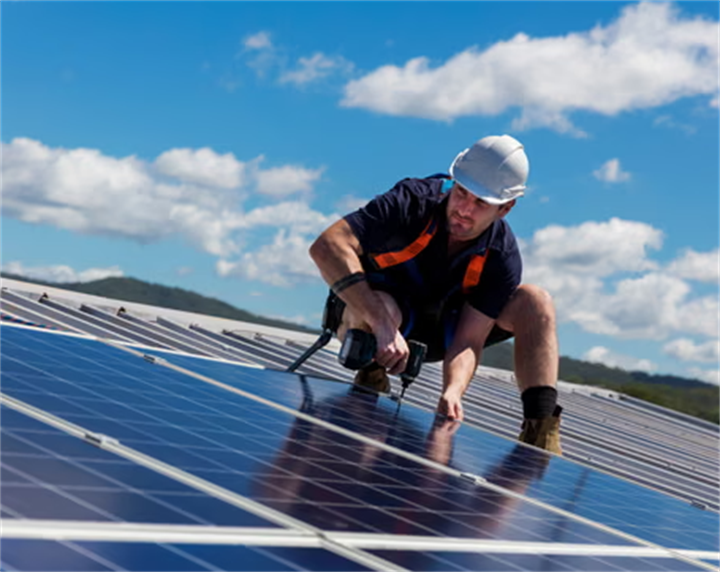
In chronically high price areas, more households are looking at rooftop solar plus battery storage. The core idea: generate (and store) some of your own power instead of buying everything from the grid.
Industry analysis suggests that in sunny areas with supportive policies, a solar+storage system can cut monthly bills by 30–50% and provide backup power during outages. Where peak to off peak price differences are large, the battery can charge at night and be used during expensive daytime hours — effectively arbitraging the price difference.
But the financial math is getting more complicated. Subsidies can change, feed in tariffs can drop, and equipment costs keep moving. Payback periods for solar only systems typically range from 5 to 10 years, depending on sunlight, local rates, and incentives. Adding a battery increases upfront cost and usually lengthens the payback period. So a cautious suggestion: before investing, do a personalized calculation based on your own usage, local sunshine, rate differences, and any available incentives. Don't just follow hype.
For renters or those who can't install solar, practical workarounds exist: choose apartments with energy efficient appliances, use curtains and natural ventilation to reduce AC use, or discuss insulation improvements with your landlord.
4. A few long-term trends worth watching
Beyond individual household actions, some broad trends will likely shape future electricity prices.
Grid aging and upgrades are a shared challenge for many high income countries. Major investments are needed, and they will eventually flow into transmission and distribution charges on bills.
Data centers and EVs are rapidly increasing electricity demand. The IEA's World Energy Outlook 2025 notes that in all its scenarios, electricity demand grows much faster than total energy demand — by roughly 40% by 2035 in the Stated Policies Scenario, and over 50% in the Net Zero Emissions scenario. Data centers and electric vehicles are major new drivers. That means ordinary households may be indirectly sharing the electricity cost of tech infrastructure expansion.
Extreme weather can cause sharp short term price spikes, especially for households on floating rate plans.
5. Where to start?
If high electricity bills are bothering you and you don't know where to begin, here is a simple path:
Step one: Spend ten minutes looking at your bill or your utility's website. Find out if you have a time of use option. If yes, shift laundry, EV charging, and water heating to off peak hours.
Step two: Check standby power and the energy labels on your major appliances. For a refrigerator or AC that's more than ten years old, seriously consider replacing it with a high efficiency model.
Step three: If you own your home and plan to stay for a while, consider hiring an energy advisor to assess insulation and rooftop solar potential. This requires upfront money, but it can lock in low electricity costs for years.
You don't have to do everything at once. Start with the low hanging fruit, then go deeper based on your situation.
So why do electricity prices differ so much across countries? It's never just a technical or resource question. It's the result of political choices, social values, historical paths, and market designs.
Once you understand that, an electricity bill stops being just a number. You see the logic behind it — and you see what you can do, within that system, to take back some control. That is the most powerful starting point.
Disclaimer:
The price trends, policy information, and household strategies mentioned in this article are based on publicly available data as of June 2026. Electricity prices, subsidies, and market conditions can change. Different data sources (global averages vs. specific countries) may have different statistical scopes. Readers should consult a professional before making any financial or investment decisions. This article is the author’s analysis and perspective only and does not constitute advice.
About the Author
Clara Whitfield is a writer and data analyst specializing in global economics. Her approach is to connect macroeconomic data with the daily lives of ordinary people, using concrete stories to explain abstract trends. She has worked at international development agencies and financial media, covering topics such as trade, consumer behavior, and the labor market. She believes that a cup of coffee, an old piece of clothing, or a pair of sports shoes can all serve as an entry point to understanding the world economy.
References
[1] Global Electricity Platform, “Electricity Prices by Country: Global Comparison,” Q4 2025 data.
[2] GlobalPetrolPrices.com, global residential electricity price data (Q1 2026; China data September 2025).
[3] U.S. Energy Information Administration (EIA), Short Term Energy Outlook and Electric Power Monthly (2025–2026).
[4] International Energy Agency (IEA), World Energy Outlook 2025, November 2025.
[5] European Commission, Quarterly Report on European Electricity Markets (Q1 2026), published May 2026.
[6] China National Development and Reform Commission (NDRC), time of use pricing policy documents (2021–2025).
[7] Various industry energy efficiency guidelines and test reports (passive house standards, appliance testing, etc.).
RELATED GUIDES

Is Your Voice Safe as a Password?Evaluating Voice Recognition in Remote Banking
In recent years, more and more banks have started using voice recognition to verify customers' identities over the phone and in mobile apps.
Manipulated Financial News Is Spreading. How Can You Spot Deepfake Information?
Deepfake technology is changing how financial information spreads—and how investors make decisions.
After the Gold: The Hidden Economics of Olympic Venues
When the Olympic flame goes out and the world’s media pack up and leave, host cities are left with a very real problem. What do you do with venues that cost billions to build?
Can Liveness Detection Stop AI-Generated Video Fraud?
"What if one day, on my screen, I see my own face saying something I never said, authorizing a transfer I never made – how do I prove that wasn’t me?"