
Why Haircuts Keep Getting More Expensive in Developed Countries: The Economic Logic of Non-Tradable Services
June 15, 2026|⏱️~10 minutes
By Clara Whitfield
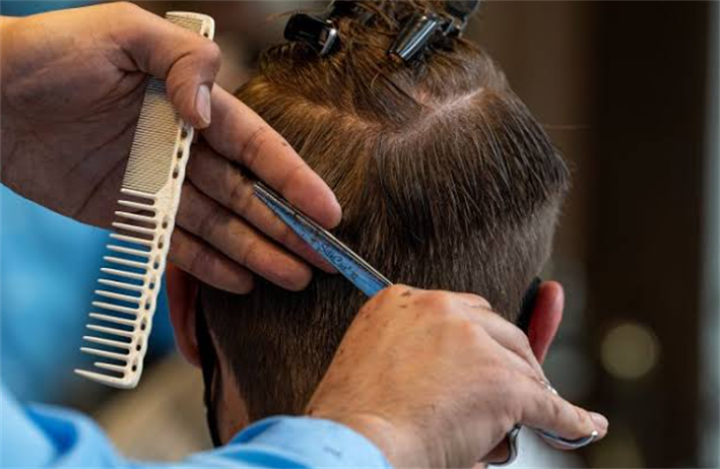
Over the past two decades, the cost of a haircut in developed countries has consistently outpaced overall inflation. In the United States, for example, long-term data from the Bureau of Labor Statistics shows that a men‘s haircut has gone from about 20 dollars in 2005 to roughly 35 dollars today. London, Paris, and Tokyo have seen similar trends – walk into an ordinary salon and the bill is likely 30 percent or more higher than just a few years ago. Meanwhile, the price of a smartphone or a flat-screen TV keeps falling.
This isn’t something you can explain with the single word “inflation.” Behind it lies a basic piece of service-sector economics: why do some things get cheaper while others – especially services that require a person to be physically present – get more expensive? This article looks at the phenomenon through the lens of non tradable services, and explores the economic mechanisms, market trends, and possible paths ahead.
Non-tradable services: why some things can’t be “shipped”
Economists divide goods and services into two categories: tradable and non-tradable.
A laptop can be made in China, shipped to New York or London, and sold for roughly the same price – it’s tradable. But a haircut is different. You can‘t get a haircut in Beijing and then “export” that service to a client in Paris. The haircut has to happen at the same time and in the same place, with the provider and the customer face to face. That’s what makes it a non-tradable service.
This distinction matters. Non-tradable services can‘t be outsourced, offshored, or replaced from a distance, so their prices aren’t directly pushed down by global competition. A barber in New York isn‘t more productive than one in Mumbai – both take roughly the same time to finish a haircut. But the New York barber may charge several times as much. That difference comes precisely from the non tradable nature of the service: its price is determined mainly by local costs, not by the world market.
Baumol’s cost disease: a simple logic
In 1966, economist William Baumol described what later became known as “cost disease.” The logic is straightforward.
Think of two sectors. Manufacturing can constantly raise output per worker through machines, assembly lines, and automation – productivity keeps growing. Services – haircuts, education, live music – are different. A barber can only serve so many customers in a day; there is a physical limit.
The problem is that rising productivity in manufacturing pushes wages up. But services have to compete for workers in the same labor market. If a factory raises pay by 20 percent, barbers might consider switching jobs. To keep them, the salon also has to raise wages. Yet the barber‘s productivity hasn’t improved – a haircut still takes the same amount of time. So the cost of the service rises relative to manufactured goods.
A 2024 study in the Journal of Environmental Management found that between 1990 and 2022, 22 out of 23 OECD countries experienced this cost disease effect, largely driven by technology.
Cost pressures
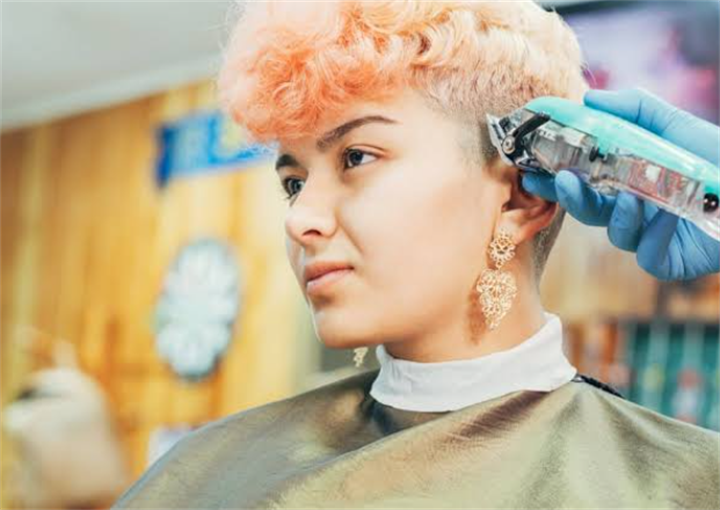
Beyond the wage-transmission mechanism, several specific costs push up haircut prices.
Rent is the most obvious. In city centers like New York, London, Sydney, or Tokyo, salons need to pay high rents to stay in business. That fixed cost eventually ends up in each customer‘s bill.
Labor costs go beyond just base wages. In the US, employers must pay for health insurance, workers’ compensation, social security, and retirement benefits. In the UK, an increase in National Insurance contributions reportedly pushed an estimated 15 20 percent of salons to raise their prices (according to industry surveys by the NHBF).
Compliance and training are also hidden expenses. Most developed countries require barbers to complete formal training and pass licensing exams. That raises the bar for entry and adds to operating costs.
The service has been upgraded
Today‘s salons have moved far beyond a simple “wash, cut, blow dry.” Scalp treatments, hair and scalp spa services, neck massages, styling consultations – these extras have become common.
To some extent, this is a deliberate business response. Faced with rising fixed costs, salons need to raise the average ticket per customer to stay profitable. Adding more services is a natural strategy.
At the same time, consumer preferences have shifted. Industry surveys show that customers in their late 20s and early 30s are much more willing to spend on personal appearance. They care more about experience, ambiance, and brand image than just the lowest price. This change in demand encourages higher prices as well. At some high end chains, a basic cut and style can cost $60 100 or the local equivalent, while a simple neighborhood shop might charge only a third of that.
Why rich countries charge so much more for a haircut?
The logic of non tradable services also helps explain why the same haircut costs far more in a wealthy country than in a poor one. This is known as the Balassa Samuelson effect.
In simple terms, rich countries have much higher productivity in tradable sectors like manufacturing. That pulls up overall wages. Because the labor market is unified, wages in non tradable sectors – including haircuts – are pulled up as well. The result: a barber in a rich country earns many times what a barber in a poor country earns, while doing essentially the same job.
The same logic works within a single country. In a high income area – say Manhattan, the City of London, or the San Francisco Bay Area – demand for local services like haircuts pushes prices even higher. Data from WalletHub (August 2025) shows that the average price for a basic haircut is about $22.50 in South Dakota, while in California or New York City it is often above $50, and high end salons can charge over $100.
Japan‘s exception: when competition overwhelms cost pressure
Baumol’s theory predicts a steady long term rise in service prices. But Japan offers an interesting counter example.
Chains like QB House offer a no frills, 10 minute cut with no shampoo – just a trim and a vacuum. In 2025, the price was still 1,400 yen (about 9 dollars). These shops achieve very high turnover – around 29,000 customers per year, or 8 10 times that of a traditional salon – and manage to make a profit on thin margins.
At the same time, Japan has about 250,000 hair salons and barbershops – a saturated market. Industry data (Nakamura Shoten, 2025) shows that the average men‘s haircut price rose only from 3,518 yen in 2015 to 3,668 yen in 2023, a meager increase of about 4.2 percent. Meanwhile, utilities and other operating costs rose significantly.
As a result, many traditional salons cannot pass on higher costs by raising prices – if they do, their customers will flee to the low cost chains or simply cut back. In 2025, bankruptcies among Japanese hair salons hit a record 235, surpassing the previous record of 215 in 2024 (reported by Japanese media, May 2026).
This case shows that service sectors are not all the same. When a truly productivity enhancing innovation appears – like the no frills, high throughput model – the “one way upward” price trend predicted by Baumol can be held back by market competition. Haircut prices are influenced not only by macro theory, but also by market structure, consumer behavior, and industry innovation.
How are consumers responding?
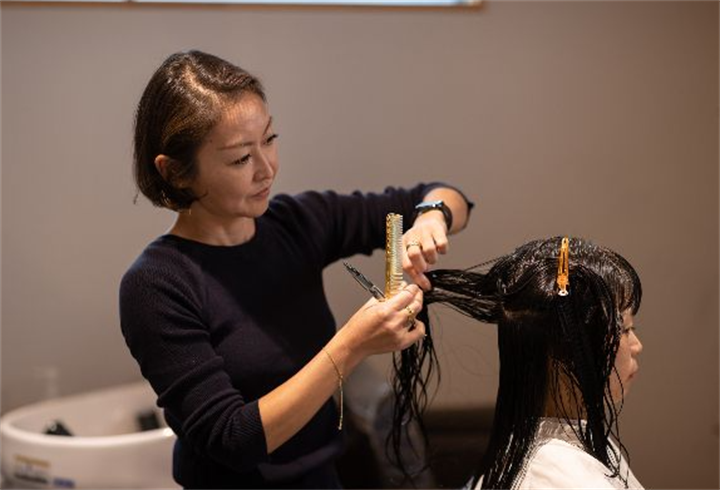
Faced with steadily rising prices, consumers are changing their behavior.
In the US, a 2025 survey found that about 13 percent of adults (among those who expressed an opinion) are considering cutting their own hair. Interest was roughly equal between men and women, with Gen Z showing the strongest DIY inclination. Notably, a significant share of those considering DIY haircuts earn between $50,000 and $100,000 a year – meaning they‘re not necessarily unable to afford a salon, but they see better value in doing it themselves (CivicScience, October 2025).
In the UK, a technique called “sunlight highlighting” has become popular among younger people. Compared to traditional root touch ups every 10 12 weeks, this technique requires only one or two salon visits per year. Haircut frequency is also dropping: the ultra short fade that needed a touch up every two weeks is giving way to more low maintenance styles, and the average time between men‘s haircuts has stretched to four weeks or more (Supreme Trim, October 2025).
A British barber with over 40 years of experience told a reporter: “The 2008 financial crisis and the Great Recession felt like a walk in the park compared to now. I thought 2020 was the hardest, but what really makes me feel the industry is falling apart is the last two years. There is a ceiling to what people can afford.” (Ripe/Modern Barber, February 2025)
Where might things go from here?
Looking ahead, haircut prices in developed countries may follow two different paths.
One is premiumization. In dense, high income city centers, haircuts may become even more experience oriented – nicer surroundings, more personalized service, higher prices per visit. This path relies on customers who are willing to pay a premium for convenience and a pleasant experience.
The other path is efficiency. No frills quick cut models, DIY tools, and automated booking systems may spread further in the mid and low price segments. These innovations have the potential to partly break through the productivity ceiling of personal services and put a brake on runaway price increases.
Technology may play a role. Online booking, client management software, and even AI assisted style suggestions can improve efficiency and turnover. But the core of the service – scissors touching hair – is unlikely to be fully replaced by machines anytime soon.
Seen from a broader perspective, the fact that service prices consistently outpace manufactured goods may be a long term structural feature of advanced economies. It is not a disease to be cured, but a reality to be understood. As Baumol himself once put it, cost disease is not a disease – it is a byproduct of economic growth.
Disclaimer:
This article is an economic observation and analysis based on publicly available data and theoretical research. It does not constitute any investment advice. Haircut prices vary widely by location, service type, and business strategy; actual prices depend on your local market.
About the Author
Clara Whitfield is a writer and data analyst specializing in global economics. Her approach is to connect macroeconomic data with the daily lives of ordinary people, using concrete stories to explain abstract trends. She has worked at international development agencies and financial media, covering topics such as trade, consumer behavior, and the labor market. She believes that a cup of coffee, an old piece of clothing, or a pair of sports shoes can all serve as an entry point to understanding the world economy.
References
[1] U.S. Bureau of Labor Statistics. Consumer Price Index for All Urban Consumers (CPI-U): Haircuts and other personal care services in U.S. city average. Series ID: CUUR0000SEGC01. Data extracted May 23, 2026.
[2] Office for National Statistics (UK). Employment in hairdressing and barbering sectors, Q1 2025.
[3] Journal of Environmental Management. Effect of structural economic transformation on the environment: Insights on transition from goods-based to service-based economies in OECD countries. Volume 373, 2024.
[4] Baumol, W. J. (1967). Macroeconomics of Unbalanced Growth: The Anatomy of Urban Crisis. The American Economic Review, 57(3), 415–426.
[5] Balassa, B. (1964). The Purchasing-Power Parity Doctrine: A Reappraisal. Journal of Political Economy, 72(6), 584–596. / Samuelson, P. A. (1964). Theoretical Notes on Trade Problems. The Review of Economics and Statistics, 46(2), 145–154.
[6] OECD. (2024). Effect of structural economic transformation on the environment (referenced within the Journal of Environmental Management article above).
RELATED GUIDES

Nigeria’s eNaira Has Been Out for Years. What Do People Actually Use It For?
As of June 2026, the project has been running for nearly five years. The government set multiple goals for it: improving financial inclusion, lowering remittance costs, and making government payments more efficient.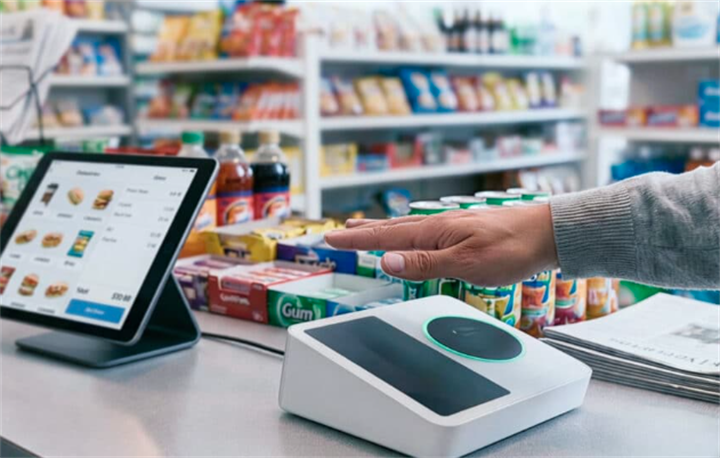
2026 Global Palm Payment Market Review: Three Regions, Three Paths
Amazon is removing palm payment devices from its grocery stores. Tencent is moving ahead with pilots in Singapore and Macau. And the Central Bank of the UAE has started a government-led biometric payment project.
Can a National Digital ID Be Used at Airports or Banks in Another Country?
Digital IDs are becoming a reality in many countries.From U.S. mobile driver's licenses to the EU's digital wallet.From India's biometric travel system to South Korea's blockchain ID plan.
Which Professions Are Shrinking Globally?
If you only look at unemployment rates, the global job market in 2026 seems fine.OECD unemployment has been around 4.9% for months — below what many economists call the "natural rate." But that number can be misleading.